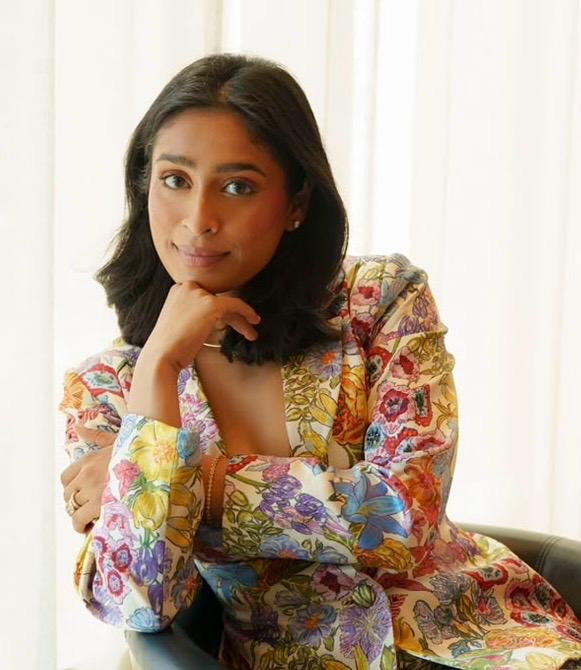
Aashumi Mody saw a familiar problem hiding inside South Asian closets. Beautiful lehengas, saris, sherwanis and other occasion-wear pieces were being purchased for weddings and celebrations, worn once or twice, and then left untouched for years. At the same time, people attending South Asian events in the United States were searching for stylish outfits without wanting to spend hundreds or thousands of dollars on something they might wear only once. Mody saw an opportunity to connect those two sides of the same problem.
Today, as the Founder and CEO of Aayka, she is building a marketplace around rental, resale and easier access to South Asian fashion. The model gives existing garments a second life while helping customers find outfits for weddings, celebrations and cultural events without necessarily purchasing something new.
Leaving Finance to Build in Fashion
Mody’s path into entrepreneurship did not begin in fashion. Before starting Aayka, she spent roughly a decade working in finance before deciding to build something around a problem she felt was being underserved: accessing modern South Asian fashion in the United States.
Aayka initially focused on connecting customers with South Asian styles, artisans and made-to-measure clothing. The company aimed to make traditional and contemporary fashion easier to discover while giving customers more flexibility around fit, style and budget. As the business grew, however, customer behavior began pointing Mody toward a different opportunity.
People did not only want to buy. They wanted to rent, and many of them also had valuable garments sitting at home that they wanted to rent or resell to someone else. That feedback would eventually reshape the business.
Listening to Customers Changes the Business
In spring 2024, Aayka expanded into fashion rental. The response was strong enough to show that demand existed for something larger than a traditional clothing label. Customers began asking whether Aayka could also rent or sell the outfits already sitting in their own closets.
Instead of treating those requests as isolated questions, Mody saw them as market signals. She began developing a peer-to-peer model in which users could list South Asian occasion wear for other people to rent or purchase. The concept was initially introduced under the name Milni and later as Milni by Aayka.
As the business evolved, Mody simplified the brand structure and brought the marketplace back under one name: Aayka. The result is a clearer vision — one platform where consumers can discover, rent, buy and resell South Asian fashion.
Giving South Asian Occasion Wear a Second Life
The model addresses a unique challenge within South Asian fashion. Occasion wear often carries high craftsmanship and emotional value, yet many garments have extremely low usage. A wedding guest may purchase a lehenga for one event and hesitate to wear the same outfit repeatedly within the same social circle, while families may accumulate wardrobes filled with clothing that is still beautiful and valuable but rarely used.
Rental and resale create another option. Someone who owns a garment can potentially earn from it rather than leaving it unused, while someone attending an event can access a higher-quality outfit without purchasing it outright. The garment itself also remains in circulation longer.
That makes Aayka part of a broader shift toward circular commerce- extending the useful life of products rather than treating every occasion as a reason to consume something new.
Building Trust in Fashion Rental
Creating a marketplace around expensive clothing requires more than simply connecting buyers and sellers. Trust is critical. Owners want to know their garments will be protected, while renters want to know an outfit will arrive in good condition, fit correctly and be ready for an important event.
Unlike everyday clothing, South Asian occasion wear can involve embroidery, delicate fabrics, custom sizing and significant emotional value. Mody has therefore emphasized the importance of combining technology with human support. Aayka maintains a physical presence in New York alongside its online platform, allowing the company to provide styling guidance and a more personal customer experience where needed.
That hybrid approach helps bridge the gap between the convenience of an online marketplace and the reassurance people often need when renting clothing for major celebrations.
Growth Through Experimentation
Aayka’s evolution has not followed a perfectly planned path. Mody has spoken openly about learning through products and collections that did not perform the way she expected. One early experience involved investing heavily in a collection, photography and influencer promotion without fully understanding whether the product matched what customers actually wanted.
The experience reinforced a lesson that now shapes her approach to building the company: founders cannot build entirely from personal preference. Customer behavior, pricing, convenience and actual demand provide information that even the strongest creative instinct cannot replace.
That philosophy helped move Aayka from selling clothing into rentals, and then from rentals into a broader marketplace. Each stage came from observing what customers were already asking the company to do.
Building a Marketplace Around the South Asian Consumer
South Asian fashion in the United States represents a distinctive consumer market. Weddings can span several days and require multiple outfits, traditional styles vary enormously by region and occasion, and many customers may have limited access to South Asian clothing stores near where they live.
Sizing and customization can also create challenges when clothing is purchased internationally. Aayka is attempting to bring some of the convenience consumers already expect from mainstream fashion marketplaces into this more specialized category.
Its current model combines traditional retail, rental and resale while maintaining a specific focus on South Asian clothing. Mody’s approach reflects a broader shift in South Asian entrepreneurship, where founders are increasingly building companies around the specific needs of diaspora consumers rather than treating them as a small niche within a larger market.
Creating Opportunity for South Asian Artisans
Aayka’s mission has also included connecting South Asian craftsmanship with customers in international markets. The company works to provide customers access to high-quality South Asian fashion while supporting artisans and designers whose work might otherwise have limited visibility outside their local markets.
For Mody, this adds another layer to the business. South Asian clothing is not simply a product category; it represents generations of craftsmanship, embroidery, textile traditions and regional design. Making these garments more accessible to diaspora consumers can create economic opportunity while also keeping cultural traditions visible in new markets.
The challenge is finding a model that respects that craftsmanship while adapting to how younger consumers want to shop. Rental and resale offer one possible answer.
Community as a Growth Strategy
Aayka’s development has also been shaped heavily by community. Customers themselves helped identify the rental and resale opportunity, and some became advisors, suppliers, advocates or early believers in the company.
That community-driven approach is particularly powerful in a peer-to-peer marketplace. Consumers are not only buyers; they can also become sellers, collaborators and sources of inventory. Every additional closet can create more supply, every renter can eventually become a seller, and every successful experience can bring another person into the network.
For a business focused on the South Asian diaspora, that kind of community participation can become an important growth advantage.
A Female Founder Building Through Iteration
Mody’s experience also reflects the less-visible side of entrepreneurship. Building a startup means making decisions without perfect information. Products fail, strategies change, brands evolve, fundraising takes longer than expected, and sometimes ideas that make sense internally become confusing once they reach customers.
Rather than treating those moments as proof that the business is failing, Mody has increasingly viewed them as information. Aayka itself is the result of that process: the company began in one form, discovered stronger demand elsewhere and continued adjusting around what its customers were showing it.
That willingness to change course may ultimately be one of the company’s most important strengths.
Making South Asian Fashion More Accessible
At its core, Aayka is addressing a simple question: why should accessing South Asian fashion in the United States still be difficult?
For a growing generation of South Asian Americans, cultural clothing remains an important part of weddings, religious celebrations, festivals and family traditions. But the way people consume fashion is changing. Younger consumers are more comfortable with resale, rental has become increasingly mainstream, online marketplaces have changed expectations around convenience, and sustainability is pushing people to reconsider whether ownership is always necessary.
Mody is bringing those trends into a category that has traditionally depended heavily on purchasing, overseas shopping or family networks. The result is a business that sits at the intersection of culture, technology, community and changing consumer behavior.
A South Asian American Founder Turning Feedback Into Opportunity
Aashumi Mody’s journey demonstrates how diaspora entrepreneurship can begin with an everyday cultural frustration. She did not need to invent a new type of clothing. Instead, she reconsidered how existing clothing moves through the community.
An outfit sitting unused in one person’s closet can become someone else’s wedding look. A customer request can become a product feature. A rental experiment can become a marketplace. And a business originally built around selling fashion can evolve into one focused on extending the life of fashion already in existence.
For Mody, building Aayka has been an exercise in listening, experimenting and being willing to change direction. Her work shows that entrepreneurship is not always about having the perfect original idea. Sometimes it is about paying close enough attention to discover what the market is already trying to tell you.
Key Takeaways About Aashumi Mody
- Aashumi Mody is the Founder and CEO of Aayka, a New York-based South Asian fashion company.
- She left a career of roughly a decade in finance to build a company focused on improving access to South Asian fashion.
- Aayka began as a fashion brand and later expanded into rentals after strong customer demand.
- Customer requests to rent and resell their own clothing led Mody to develop a peer-to-peer marketplace.
- The marketplace was initially launched as Milni and later Milni by Aayka before being consolidated back under the Aayka brand.
- Aayka now positions itself around South Asian fashion rental and resale.
- The model allows garments sitting unused in customers’ closets to re-enter circulation through rental or resale.
- Aayka also maintains a physical presence in New York alongside its online platform.
- Mody’s entrepreneurial approach emphasizes customer feedback, experimentation, adaptability and building around real consumer behavior.
- Her work reflects the growing opportunity to build consumer businesses specifically around the needs of the South Asian diaspora.