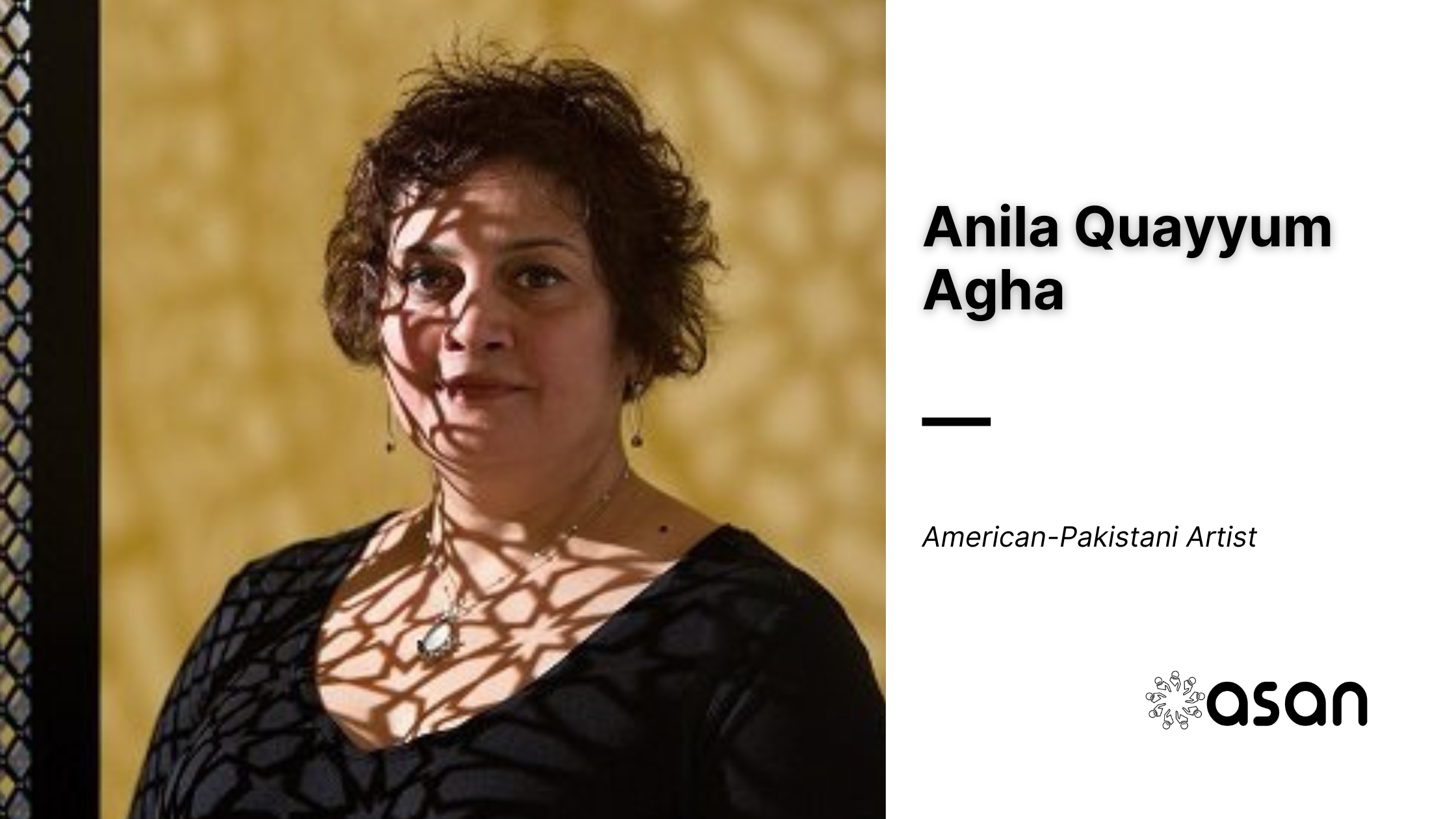
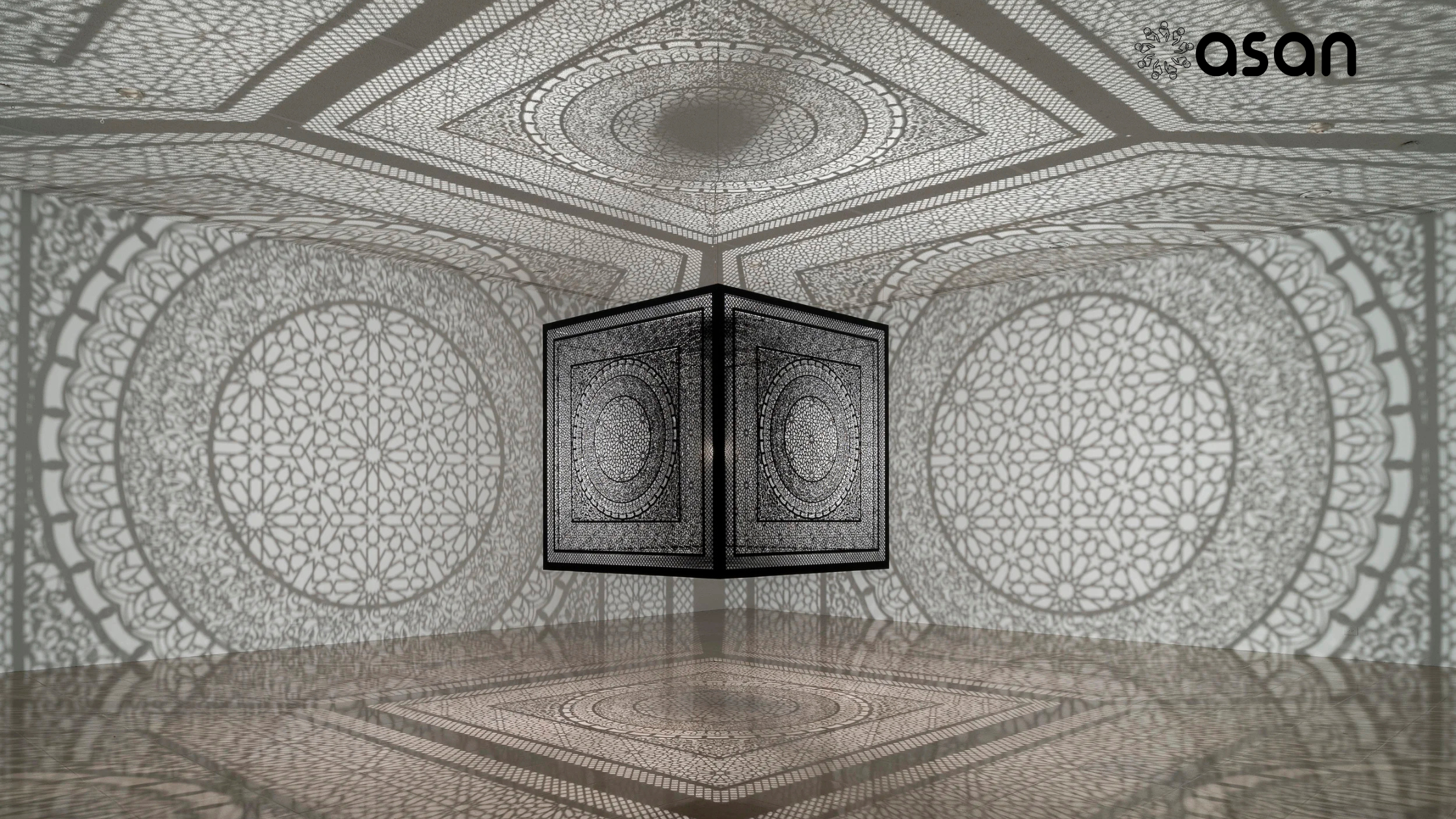
The Seattle Asian Art Museum (SAAM) unveiled the solo exhibition Anila Quayyum Agha: Geometry of Light, starting August 27, 2025 and running through April 19, 2026. The show presents the American-Pakistani artist’s (b. 1965) signature large-scale laser-cut steel cube sculptures from which light radiates dramatic geometric shadows across walls, floor and ceiling.
Agha’s work draws from both her childhood in Lahore and her adult practice in the U.S., fusing craft traditions (Islamic geometry, South Asian ornament) with immersive installation and conceptual frameworks. In statements accompanying the exhibition, Agha references the interplay of light / dark, space and the human body - how she uses shadow projection to make viewers physically inhabit the work.
For the South Asian American community and the broader art world, the show matters because it signals a move beyond flat surfaces or photographic practices toward spatial, embodied installations by artists of South Asian heritage. Agha’s achievement here is especially meaningful given SAAM’s note that this is the first solo exhibition of a South Asian American artist in that museum’s ninety-year history.
From a market and institutional standpoint, the timing is noteworthy: as the global art fair season heats up, including events like Art Basel Miami Beach, a documented, high-visibility solo exhibition by a diaspora artist enhances your credentials as a cultural journalist covering nuance, identity and spectacle in the art world.
Agha’s work invites a double reading - aesthetic (shadow, pattern, form) and symbolic (diaspora, gender, architecture, belonging). For instance her piece “A Beautiful Despair” (2021) - a lacquered steel cube measuring 60″ × 60″ × 60″- is included in the installation and physically invites visitor engagement by projecting an intricate silhouette into the gallery space.
In writing about this exhibition, focus can shift between the formal qualities of her sculptural-light work and the broader themes it engages: how diaspora artists are shaping immersive environments, how craft traditions inform contemporary installation practice, and the ways art institutions are responding by mounting immersive, medium-expanding shows rather than conventional painting or drawing surveys.
For your piece under your byline, you might highlight: the visitor experience of entering a seemingly minimal cube structure only to be engulfed by complex shadow-patterns; interviews or quotes from Agha or the curator about how sacred geometry relates to secular space; marketplace and institutional context (how works like these are being collected, installed in public spaces, exhibited in fairs); and how the geographic shift from Lahore roots to U.S. galleries reflects broader diaspora dynamics.
This exhibition is well-positioned for your press portfolio: a U.S. institution, South Asian American artist, recent launch (2025), solo format, immersive and timely.
You could structure the article like this:
- Opening anecdote or image: entering the gallery, light shifting, visitor reaction
- Artist background: Lahore origin, migration, early training, move into installation
- Description of key works and installation experience
- Institutional & market context: why SAAM is mounting this, what collectors are doing, what this says about South Asian American art today
- Why it matters now: art fair alignment, immersive art trends, diaspora representation in global art scene
- Closing reflection: what this means for audiences, the artist’s next steps, and how this sets the stage for you as a journalist covering major art-fair events.
Key Takeaways About Anila Quayyum Agha
- Anila Quayyum Agha is a Pakistani-American artist whose solo show Geometry of Light opened August 27, 2025 at the Seattle Asian Art Museum.
- The exhibition features her signature laser-cut steel cube installations that project complex shadows and explore form, light, identity and space.
- This is one of the first major U.S. solo exhibitions of a South Asian American artist at a major institution in immersive installation form.
- The work merges South Asian craft traditions (Islamic geometry, ornamental cut-steel) with cutting-edge installation and visitor participation.
- For art-fair journalists, the exhibition offers a compelling angle: diaspora narratives + installation art + institutional validation = strong coverage asset.