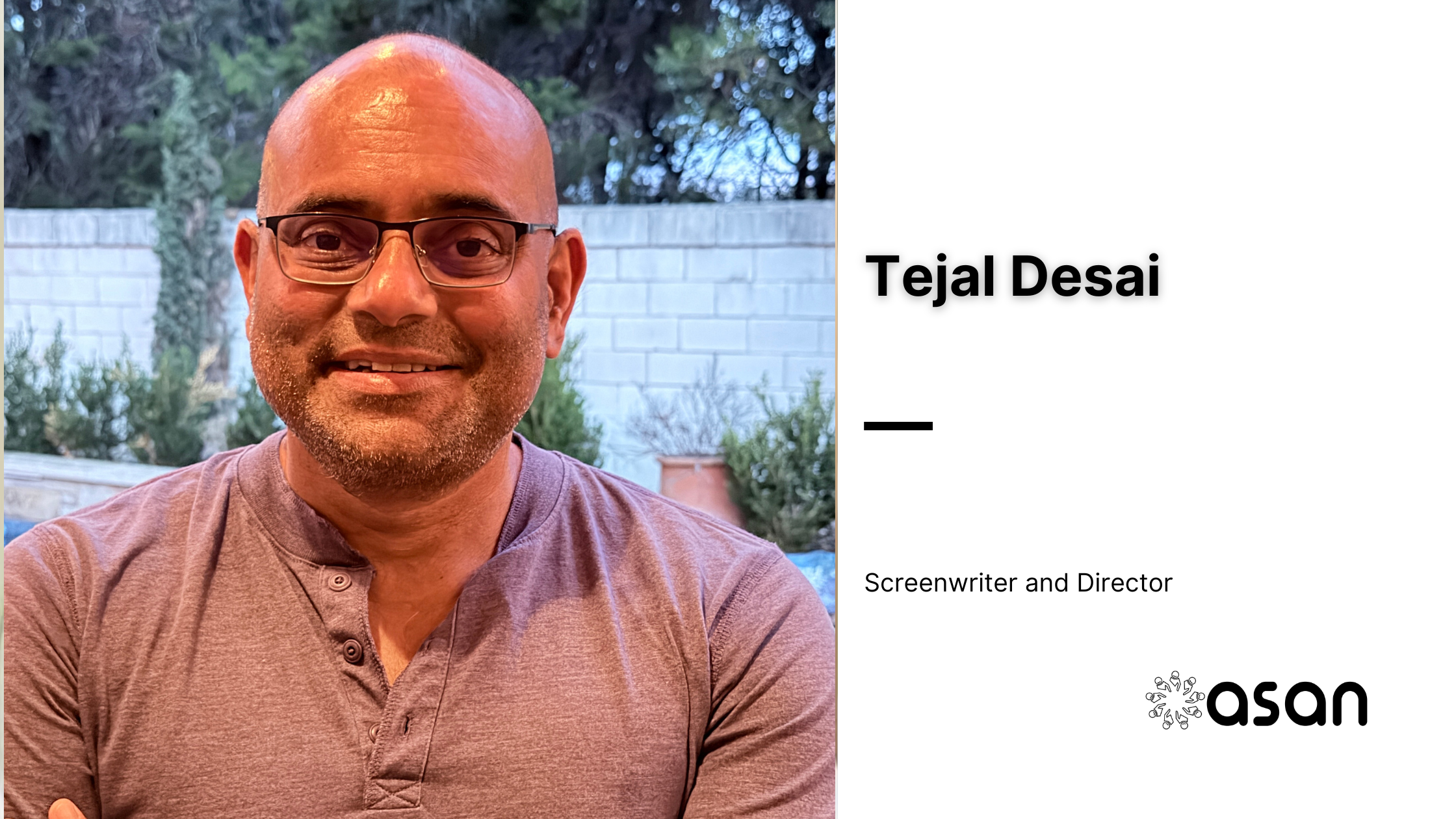
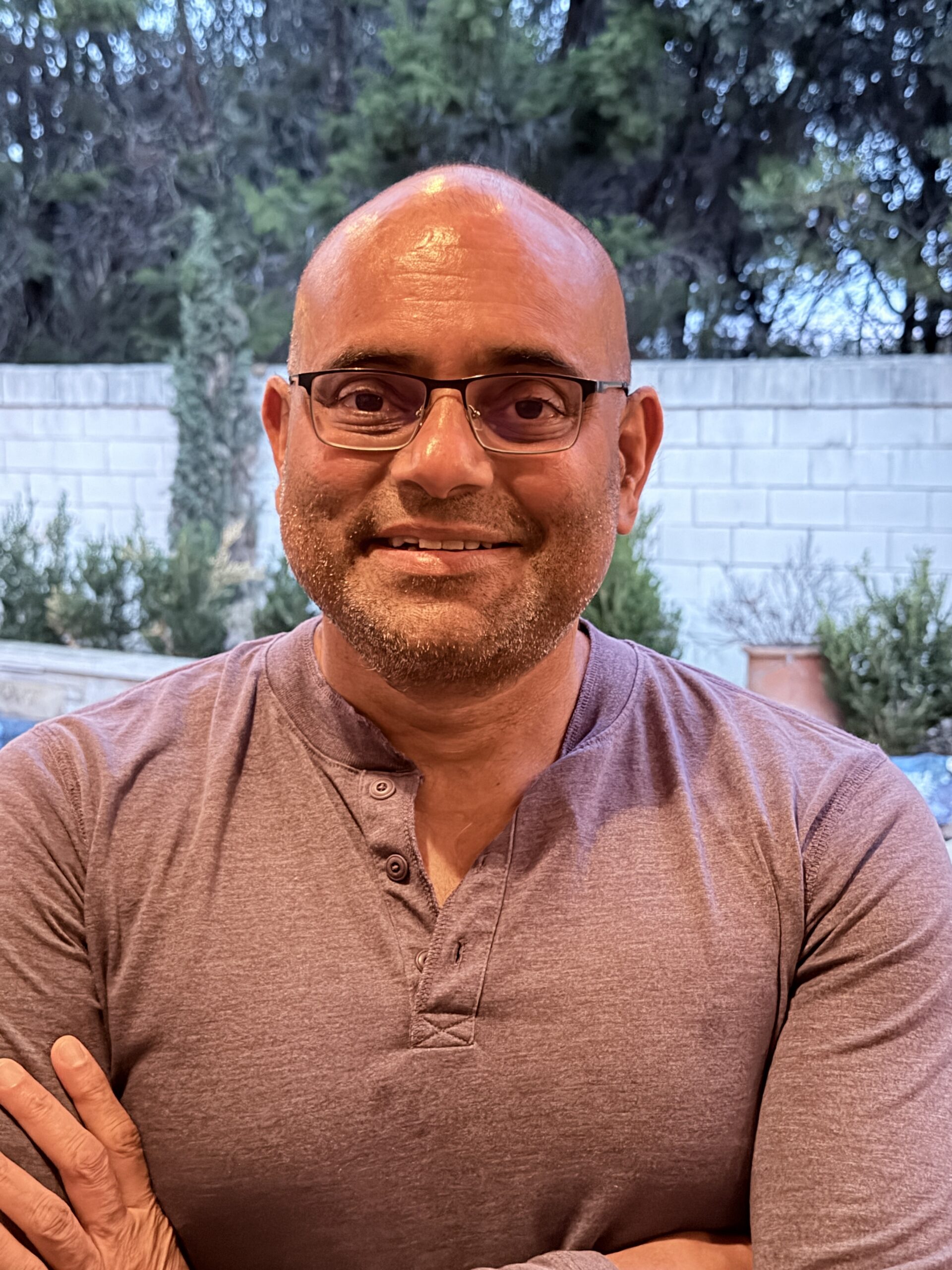
Tejal Desai: From Pharmacist to Award-Winning Filmmaker, Bringing South Asian Stories to Hollywood
Discover Tejal Desai's journey from pharmacist to award-winning Hollywood screenwriter and director, his film Cowboys and Hindus, and his upcoming feature Cowgirls & Indians starring Manisha Koirala.
By ASAN Editorial ·
A Filmmaker Who Chose Passion Over Convention
Leaving behind an established profession to pursue an uncertain creative career requires more than ambition. For award-winning screenwriter and director Tejal Desai, it meant stepping away from pharmacy and committing himself to a lifelong passion for storytelling. Today, his career includes the prestigious Academy of Motion Picture Arts and Sciences' Nicholl Fellowship in Screenwriting, professional writing assignments involving major Hollywood studios, and an award-winning independent film that brings Indian and American cultures together.Desai's journey is particularly meaningful within the South Asian American community, where conventional professional paths have often been associated with stability and success. His decision to pursue filmmaking reflects a different understanding of achievement, one rooted in creativity, perseverance, and personal fulfillment. Through his work, he explores cultural identity, human relationships, and the unexpected ways people discover purpose.
From Pharmacy School to a Life in Film
Tejal Desai's professional journey began far from Hollywood. He earned a Bachelor of Science in Pharmacy from the University of Connecticut and entered the healthcare profession, following a structured career path that offered security and stability. However, his interest in writing and storytelling had been developing long before he became a pharmacist. A screenwriting course during college introduced him to filmmaking as a serious creative possibility, leaving an impression that continued throughout his years in pharmacy.Although Desai practiced pharmacy for years, the desire to tell stories never disappeared. Eventually, he decided to return to formal education, earning a Bachelor of Arts in Film from SUNY Purchase. The transition required him to enter an industry where success was far less predictable than in healthcare. Rather than following established career milestones, he had to develop original ideas, build creative relationships, and learn the practical realities of filmmaking.His decision illustrates that professional reinvention does not necessarily mean abandoning everything learned in an earlier career. Sometimes, finding fulfillment requires recognizing a passion that has been present all along and having the courage to pursue it.
Winning the Prestigious Academy Nicholl Fellowship
One of Tejal Desai's most significant achievements came in 2003, when he and fellow screenwriter Brian C. Wray received the Academy of Motion Picture Arts and Sciences' Don and Gee Nicholl Fellowship in Screenwriting for their screenplay Linda and Henry. The fellowship is among the film industry's recognized opportunities for emerging screenwriters and is awarded through a highly competitive selection process. That year, the competition received 6,048 screenplay submissions, with five scripts ultimately selected for fellowships. Desai and Wray also made history as the first collaborative writing team to receive the award.For Desai, the recognition validated his decision to pursue filmmaking after years in another profession. It established his credibility as a screenwriter and created opportunities to develop relationships with film professionals, producers, and studios. However, he would eventually discover that industry recognition and professional success do not always follow the same path. Winning a prestigious award could open doors, but turning promising opportunities into completed films required persistence, initiative, and an understanding of the business behind filmmaking.
Building a Career With Disney, Focus Features, and Lifetime
Following his Nicholl Fellowship recognition, Desai developed a professional screenwriting career that included assignments connected to major entertainment companies. His work includes writing for Disney, Focus Features, and Lifetime Television, giving him experience with different storytelling formats and audiences. According to his filmmaker biography published by Indie Meme, Disney hired him to develop and write a sequel to Pinocchio, while his other assignments included projects for Focus Features and Lifetime.Desai also contributed to the story for the 2018 Lifetime television movie A Tale of Two Coreys, a biographical drama examining the lives of actors Corey Feldman and Corey Haim. His career additionally includes producing the feature drama ABCD, starring Madhur Jaffrey, which premiered at the London Film Festival. These projects reflect his involvement in both mainstream entertainment and independent filmmaking.Despite these accomplishments, Desai experienced the unpredictable nature of Hollywood firsthand. Projects could attract considerable attention yet remain in development for years, while creative decisions often depended on financing, producers, and other circumstances beyond a writer's control. These experiences eventually influenced his decision to become more directly involved in producing and directing his own work.watch full interview on The INDUStryShow: https://theindustryshow.org/tejal-desai/
The Setbacks That Changed His Approach to Filmmaking
Despite early recognition and professional opportunities, Desai encountered significant challenges throughout his filmmaking career. He has described projects that generated interest from established industry figures, including Robert Redford and actresses such as Meryl Streep and Sissy Spacek, but ultimately failed to move forward. These setbacks exposed one of the central challenges of creative work: even a promising screenplay and influential supporters do not guarantee that a film will be made.Looking back, Desai recognized that he had sometimes depended too heavily on others to advance his projects. Instead of waiting for producers, financiers, or industry decision-makers, he began approaching filmmaking with a greater sense of personal responsibility. This shift encouraged him to think not only as a screenwriter but also as a director, producer, and entrepreneur capable of actively developing his own opportunities.The experience reshaped his understanding of success. While external recognition remained meaningful, he increasingly valued the ability to transform an idea into something audiences could experience. His approach reflects an important lesson for emerging filmmakers: creative talent must be supported by practical decision-making, sustained effort, and the willingness to take ownership of difficult projects.
Cowboys and Hindus: Bringing Two Cultures Together Through Cinema
Desai's commitment to independent storytelling is reflected in his short film Cowboys and Hindus, a cross-cultural drama exploring identity, friendship, and personal transformation. The film follows Asha, a middle-aged Indian woman who travels to a Texas cattle ranch and unexpectedly forms a friendship with a woman deeply connected to cowboy culture. As Asha encounters an unfamiliar way of life, she begins reconsidering her circumstances and discovering new possibilities for independence and personal fulfillment.Set against the landscapes of the American Southwest, the film brings together two cultural traditions that might initially appear to have little in common. Indian customs and Texas ranch life provide opportunities for humor and cultural contrast, but the story is ultimately grounded in shared human experiences. Through Asha's journey, Desai explores the idea that meaningful change can occur at any stage of life.Cowboys and Hindus began attracting attention through the independent film festival circuit in 2025, premiering at the Indie Meme Film Festival in Austin, Texas. One of its most notable achievements came when Tejal Desai received the Best Director award at the 2025 Rock the Shorts Film Festival in Los Angeles. The film also received Best Short Film at the Indic Film Festival in Dallas and Best Indian Film at the World Class Film Awards in New York.For Desai, festival recognition represented more than professional achievement. Audience responses showed that the film's themes could resonate with viewers regardless of cultural background. He has described receiving emotional reactions from people who connected deeply with the characters, reinforcing his belief that storytelling can build meaningful connections between different communities.
From an Award-Winning Short to Cowgirls & Indians With Manisha Koirala
Desai's work on Cowboys and Hindus has helped advance a more ambitious creative project. In September 2026, Variety reported that acclaimed actress Manisha Koirala had joined Desai's upcoming independent feature film, Cowgirls & Indians. The project expands the ideas explored in his award-winning short into a feature-length story, with Desai serving as writer and director and Kirtana Banskota producing.The film follows Asha, a middle-aged Indian woman navigating questions of identity, belonging, and resilience in the American Southwest. Koirala, widely recognized for performances in films such as Dil Se, 1942: A Love Story, and Netflix's Heeramandi, is attached to portray the central character. The production was announced with plans to begin filming in November 2026 in and around Austin, Texas.The announcement represents an important development in Desai's longstanding effort to bring his story to a wider audience. His original screenplay had previously received recognition through the Final Draft Big Break Screenwriting Competition and the CineStory Screenwriting Competition. Moving from a recognized screenplay to an award-winning short film, followed by plans for a feature adaptation, reflects years of persistence and creative development.Beyond its production ambitions, Cowgirls & Indians addresses an important gap in contemporary storytelling. Meaningful leading roles centered on middle-aged South Asian women remain relatively uncommon in mainstream entertainment. By placing Asha's journey at the center of the narrative, Desai explores personal reinvention as a possibility throughout adulthood rather than an experience limited to youth.
Why South Asian Representation Matters in Independent Filmmaking
South Asian American cinema has increasingly created space for stories that move beyond familiar portrayals of immigration, professional success, and generational conflict. Independent filmmakers have opportunities to explore more complex experiences involving cultural identity, belonging, and relationships between different communities. Desai's work contributes to this broader creative landscape by placing South Asian characters in settings not traditionally associated with Indian American storytelling.The Texas setting of Cowboys and Hindus is particularly significant because it examines cultural exchange through ordinary human relationships. Rather than presenting Indian and American traditions as opposing forces, the narrative explores how people from different backgrounds can influence and learn from one another. This approach makes the story accessible to wider audiences while retaining the cultural details that give its characters authenticity.Desai's career also offers a different perspective on South Asian American professional identity. His transition from pharmacy to filmmaking challenges the assumption that achievement must follow a predictable professional route. Through culturally distinctive stories, he demonstrates how creativity can become a meaningful contribution to the broader community.
Finding an Authentic Voice in a Changing Film Industry
As film production technologies continue to evolve, Desai believes that developing a distinctive creative voice remains one of the most important responsibilities of a filmmaker. Digital tools, accessible production equipment, and emerging artificial intelligence technologies have changed how stories can be created and distributed. However, technological accessibility does not automatically produce compelling characters, emotionally engaging narratives, or original ideas.For Desai, the deeper challenge lies in understanding what a filmmaker wants to communicate. Writers and directors must discover the experiences, observations, and perspectives that make their stories worth telling. This process requires patience because authentic storytelling cannot simply be reduced to following industry trends or reproducing successful formulas.His experiences also highlight the entrepreneurial nature of independent filmmaking. Writers and directors often participate in fundraising, production planning, marketing, festival submissions, and audience development. Desai's decision to become more involved in these responsibilities reflects his understanding that creative independence requires both artistic conviction and practical business knowledge.
Family, Laughter, and Life Beyond the Film Set
Although filmmaking remains an important part of his identity, Desai places considerable importance on maintaining a fulfilling life outside his professional work. He spends time with his wife and children and incorporates exercise, including running and swimming, into his routine. These activities help him maintain balance while working in an industry where creative projects can demand considerable emotional commitment.Laughter is another central part of Desai's personal philosophy. As someone drawn to comedy and the ability of humor to connect people, he believes that laughter can bring perspective even during difficult circumstances. His family embraces a simple principle: love and laughter should form the foundation of everyday life. This outlook influences both his personal relationships and his approach to storytelling, where humor can make serious subjects more accessible.Desai also draws creative inspiration from ordinary experiences. Observing people in airports, shopping centers, and other public spaces allows him to notice interactions that may eventually develop into characters or story ideas. For him, everyday life provides an ongoing source of creative material.
Mindfulness, Poetry, and Learning to Live in the Present
Alongside his creative interests, Desai finds inspiration in literature and philosophy. He has spoken about reading poets such as Robert Frost and Walt Whitman, whose writing encourages reflection on individuality and the human experience. These influences help him maintain perspective while navigating the uncertainties of a creative profession.Desai also draws from Buddhist ideas about mindfulness and living in the present moment. Instead of becoming consumed by what might happen in the future, he emphasizes concentrating on the experience immediately in front of him. Whether writing, exercising, walking his dog, or spending time with his children, he believes being mentally present can make ordinary activities more meaningful.This philosophy is especially relevant to a career in which outcomes frequently remain uncertain. Screenplays may take years to develop, financing can depend on circumstances beyond a filmmaker's control, and recognition does not guarantee the next opportunity. By focusing on what he can accomplish today, Desai seeks to prevent future worries from overshadowing the satisfaction of creative work and daily life.
A Creative Journey Defined by Persistence and Personal Growth
Tejal Desai's career demonstrates that professional success rarely follows a predictable path. His journey from pharmacy to filmmaking included prestigious recognition, industry opportunities, stalled projects, and the challenges of producing independent cinema. Each experience encouraged him to take greater responsibility for advancing his creative vision.His achievements, particularly the Academy Nicholl Fellowship and recognition for Cowboys and Hindus, reflect years of dedication to storytelling. The development of Cowgirls & Indians represents another significant step toward bringing culturally distinctive narratives to wider audiences. Yet his personal philosophy suggests that professional milestones are only one part of a fulfilling life.For aspiring filmmakers, South Asian American creatives, and professionals considering unconventional career changes, Desai's story offers a perspective grounded in ambition and self-awareness. Creative fulfillment requires persistence, adaptability, and the ability to learn from disappointment while maintaining meaningful relationships beyond work. Ultimately, his journey reminds us that finding one's voice, taking initiative, and appreciating the present can be just as important as achieving public recognition.
Key Takeaways About Tejal Desai
Award-winning filmmaker: Tejal Desai is an American screenwriter and director whose career includes writing assignments for Disney, Focus Features, and Lifetime Television.
Unconventional career transition: He earned a pharmacy degree from the University of Connecticut before pursuing filmmaking and earning a film degree from SUNY Purchase.
Academy Nicholl Fellowship: In 2003, Desai and Brian C. Wray received the prestigious Nicholl Fellowship in Screenwriting for Linda and Henry.
Independent filmmaking success: His short film Cowboys and Hindus explores cultural identity, friendship, and personal transformation against the backdrop of a Texas cattle ranch.
Festival achievements: Desai received Best Director at the 2025 Rock the Shorts Film Festival, while Cowboys and Hindus earned additional festival recognition.
Upcoming feature film: Desai is developing Cowgirls & Indians, an independent feature starring Manisha Koirala, with production announced for November 2026 in Texas.
South Asian representation: His filmmaking brings culturally distinctive South Asian characters and experiences into broader American narratives.
Creative philosophy: Desai emphasizes finding an authentic voice, taking initiative, learning from setbacks, and remaining adaptable.
Personal life lessons: He believes in embracing love and laughter, living in the present moment, and avoiding unnecessary worry about the future.
ASAN brings together Physical AI professionals in Orange County and LGBTQ+ South Asians in West Hollywood through two networking events in October 2026.