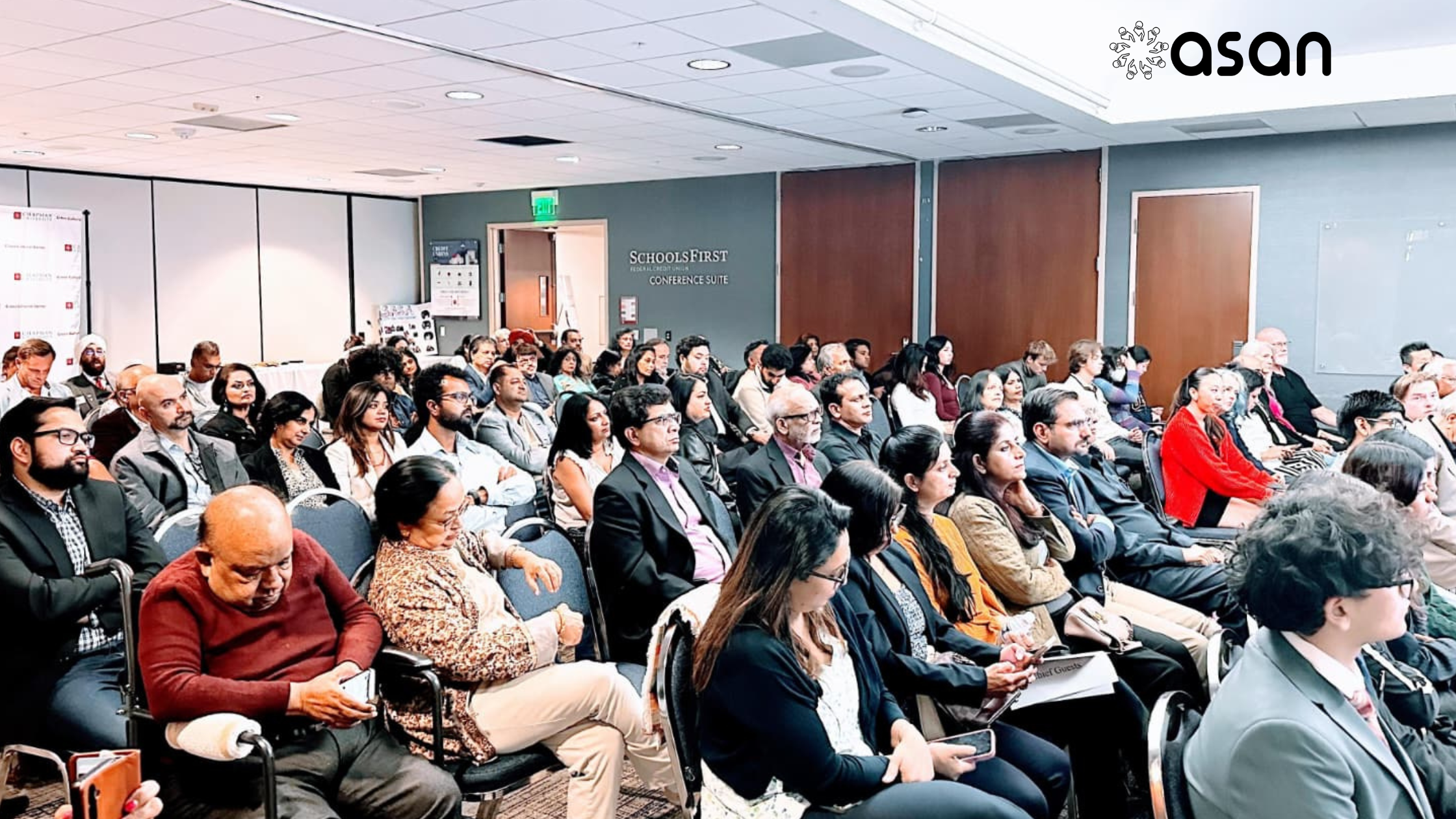
Orange County doesn’t usually see a line out the door for an entrepreneurship event on a weekday night. This one did. The Chapman University Honors Program, in partnership with the American South Asian Network (ASAN), drew a full-house, standing-room-only crowd for Basement to Billions, an evening that blended legacy, ambition, community, and the next generation’s fire.
The star attraction: Manu and Rika Shah, the husband-wife duo behind MSI, the largest flooring, surfaces, and home materials companies in the United States – a company they started in their Fort Wayne, Indiana basement and scaled to 3+ Billion in annual revenues. Their story has long circulated in business circles as folklore: vision meets grit, married to an uncanny ability to bet correctly on market shifts before anyone else noticed the tide turning.
Setting the tone for the evening, Dr. Pradip Shukla, The Shah Family Endowed Chair in Innovativeness, opened with a reminder that innovation isn’t an abstract principle, it’s a lived pattern across the South Asian diaspora. He highlighted the expanding body of research on South Asian entrepreneurship, including work led by Dr. Nitin Bajaj, whose seminal work includes the first comprehensive mapping of NASDAQ and NYSE-listed CEOs of South Asian origin. Shukla shared that his honors students are now building on this research and publishing a full book capturing the scope, scale, and modern impact of the diaspora’s leadership footprint.
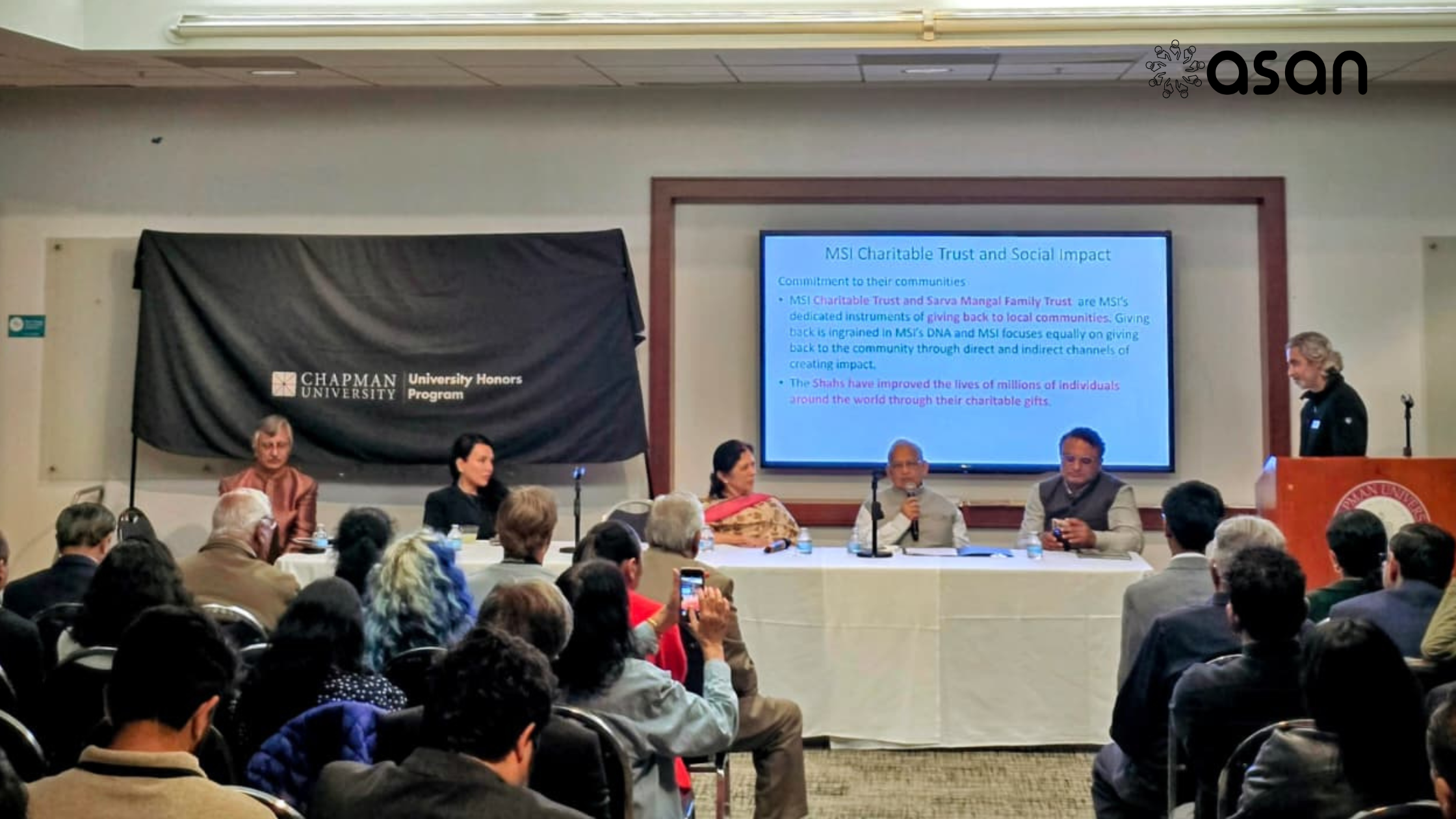
The energy turned electric as Dr. Bajaj joined Manu and Rika Shah on stage for an intimate, candid Q&A. No fluff. No recycled founder clichés. Instead, the audience, which included students, founders, executives, and elected officials from Artesia, Cerritos, Yorba Linda, and Villa Park got a rare look into the early decisions that separated MSI from the pack.
The Shahs spoke the realities of immigrant risk-taking, use of innovation and technology and the long tail of consistency that ultimately compounds into generational outcomes. Their journey felt less like a business case study and more like a masterclass in strategy and long-game thinking. Shah likened it to the game of Chess. By the end of the conversation, you could see it on the faces in the room: people recalibrating what “possible” actually means.
A powerful moment followed when Dr. K.J. Srinivasa, Consul General of India in Los Angeles, addressed the audience. He underscored how deeply South Asians are woven into the American economic engine and spotlighted the importance of youth leadership as the next phase of that impact story. His remarks landed with clarity: this community isn’t just participating in America’s growth, it’s co-authoring it.
The evening then shifted to the Youth Leaders Panel, a sharp contrast in age but perfectly aligned in ambition. Organized by Yatri Shukla, the panel brought together rising voices, Aditi Bhattacharya, Aditya Komaragiri, Eshan Patil, Om Gupta, Sujash Mukherji, Sanchi Kohli, and Zara Shah to dissect what it means to grow up South Asian American in a world where representation is finally catching up to reality. Their conversation pushed beyond the usual platitudes and into real territory: navigating identity, leading with originality, using technology and community as leverage, and rewriting the script for what leadership looks like in their generation.
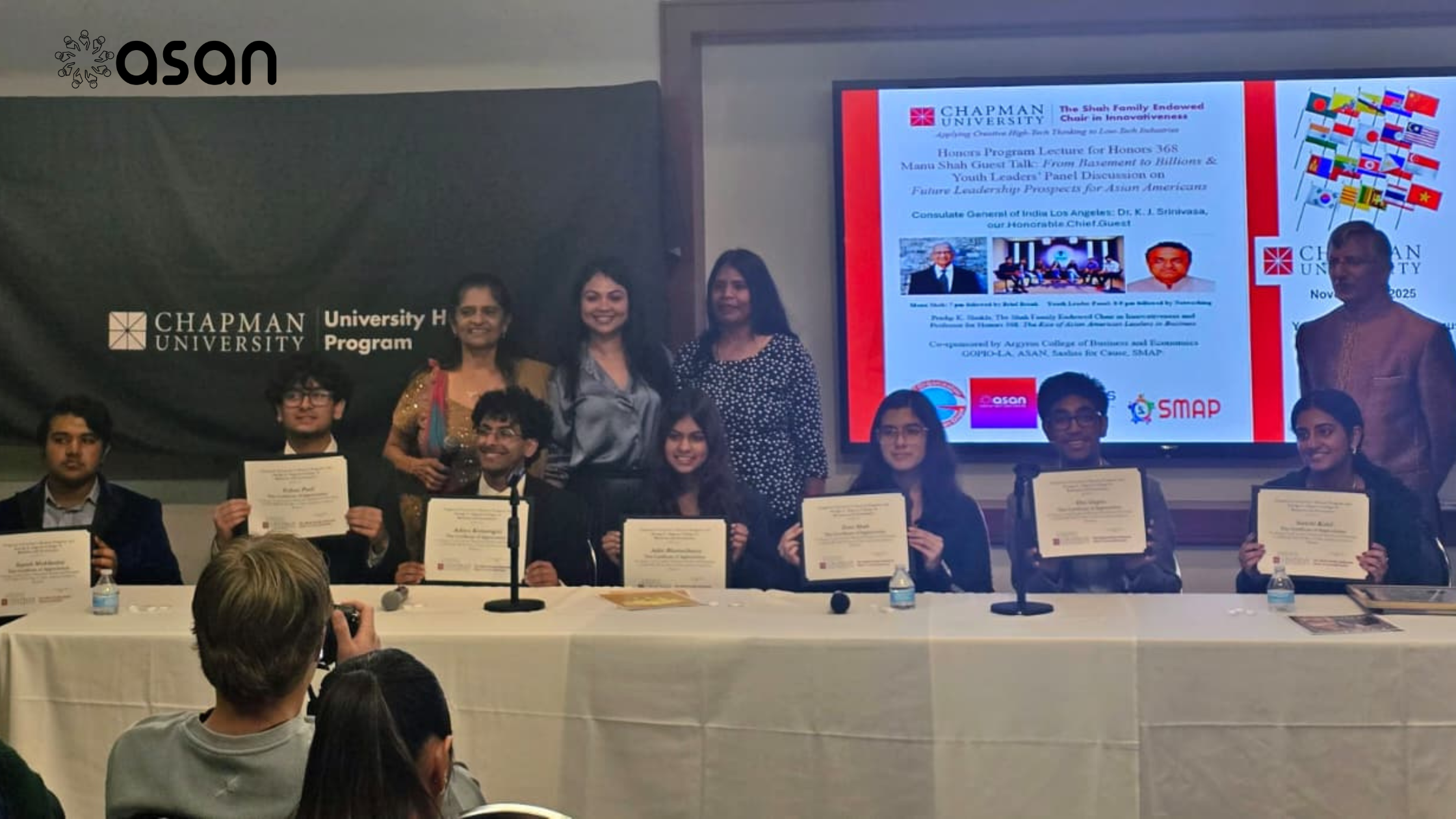
What made the night stand out wasn’t just the presence of marquee names or the sight of mayors and council members packed into the audience. It was the continuity, a living timeline from first-generation builders to next-generation catalysts.
Basement to Billions wasn’t just a program. It was a statement:
South Asian leadership isn’t emerging, it’s here, multiplying, and shaping the American future in real time.