
On January 4, Ketan Bhuptani was sworn in as Deputy Mayor of Livingston Township, New Jersey, becoming the first Indian-American to hold the role in the township’s history. The appointment represents a significant moment for local governance in one of New Jersey’s most civically engaged suburban communities, and it reflects the growing presence of South Asian Americans in municipal leadership across the United States.
Livingston Township, located in Essex County, is known for its active local government, strong school system, and diverse population. The deputy mayor role is not ceremonial alone. It plays a central part in shaping policy priorities, supporting township operations, and representing residents in both formal and informal civic settings. Bhuptani’s elevation to the position places him at the center of decision-making on issues that affect daily life for thousands of residents, from public services and infrastructure to community engagement and long-term planning.
Bhuptani’s appointment follows his service on the Livingston Township Council, where he has been involved in deliberations on budgetary planning, public safety, and quality-of-life initiatives. His path to the deputy mayoralty reflects a broader trend in which local offices are increasingly shaped by leaders with professional backgrounds outside traditional political pipelines. Like many municipal officials, Bhuptani brings experience rooted in community service, professional expertise, and sustained local involvement rather than partisan politics.
For Indian-American and South Asian American communities, milestones at the municipal level often carry particular weight. While national and statewide offices receive the most attention, township and city governments are where residents interact most directly with public officials. Zoning decisions, school funding, transportation planning, and emergency services are all shaped at this level. Representation in these roles signals not only visibility, but also trust built over years of local engagement.
Livingston Township has seen steady demographic change over the past two decades, with South Asian families becoming an increasingly visible part of the community. Bhuptani’s leadership role reflects this evolution and underscores how civic participation often follows long-term settlement, school involvement, and volunteerism. It also highlights the way immigrant and first-generation families translate professional success into public service at the local level.
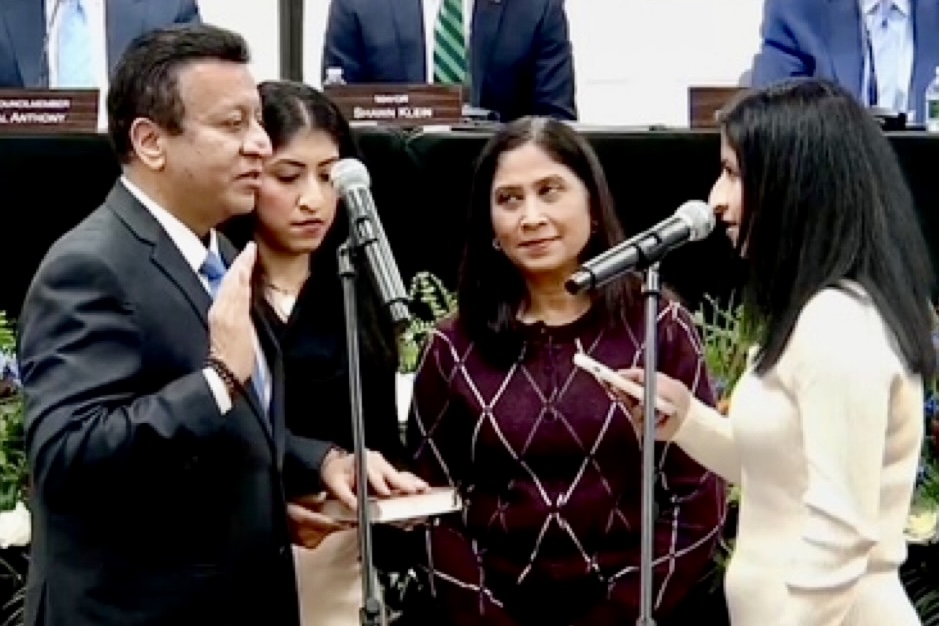
The swearing-in ceremony on January 4 marked the formal beginning of Bhuptani’s tenure as deputy mayor. Such ceremonies, though procedural, are symbolic moments in municipal life. They affirm continuity in governance while acknowledging new leadership. For Livingston Township, the moment represented both. It reinforced established civic traditions while also signaling a more inclusive reflection of the community it serves.
Across New Jersey, Indian Americans have increasingly stepped into elected and appointed roles at the township, borough, and city level. These roles often serve as entry points into public office, requiring deep familiarity with local issues and consistent engagement with residents. Bhuptani’s appointment fits within this pattern, showing how local councils and mayoral teams are evolving alongside the communities they govern.
From a governance perspective, the deputy mayor role often involves acting as mayor when required, coordinating across departments, and supporting policy implementation approved by the council. It demands not only leadership, but also consensus-building and responsiveness to resident concerns. These responsibilities make the role a meaningful platform for shaping local outcomes and mentoring future civic leaders.
Bhuptani’s appointment also carries significance beyond Livingston Township. For younger South Asian Americans considering public service, local leadership milestones provide tangible examples of accessible pathways into governance. They demonstrate that civic impact does not require waiting for national office or high-profile appointments. Instead, it often begins with neighborhood-level involvement and sustained participation in community institutions.
As Livingston Township continues to navigate issues common to many suburban communities, including growth management, fiscal responsibility, and community cohesion, leadership diversity becomes an asset. Leaders with varied cultural backgrounds and professional experiences can broaden perspectives and improve decision-making, particularly in communities with increasingly diverse populations.
Ketan Bhuptani’s swearing-in as deputy mayor on January 4 thus represents more than a personal achievement. It marks a step forward in the normalization of South Asian American leadership in everyday governance, where policy meets practice and representation shapes trust between residents and their local institutions.
Key Takeaways About Ketan Bhuptani
- Became the first Indian-American Deputy Mayor of Livingston Township, New Jersey.
- Was sworn into the role on January 4 following service on the township council.
- Represents growing South Asian American leadership at the municipal level.
- Holds a role central to local policy coordination and civic representation.
- Reflects broader demographic and civic shifts within New Jersey communities.