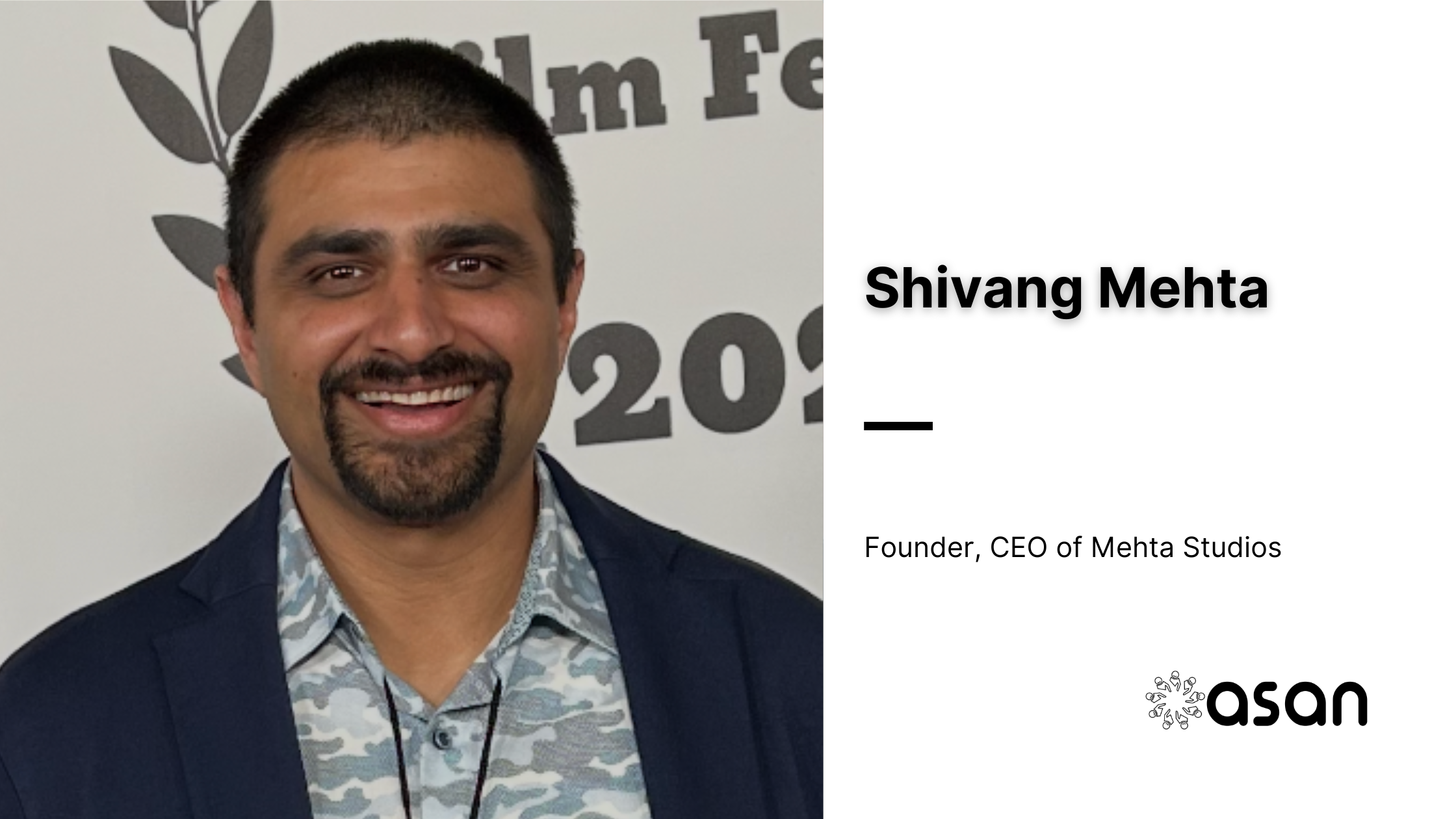
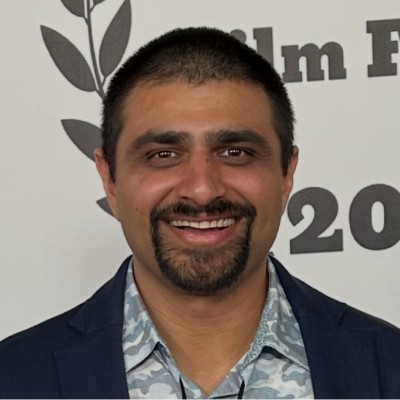
For Shivang Mehta, filmmaking has never followed a perfectly straight path. The Los Angeles-based filmmaker has worked across television production, writing, directing and producing before building Mehta Studios, an independent production company through which he is developing original film projects. His career has included story-production work for major television networks and platforms including Bravo, CBS, Discovery+, Nickelodeon and OWN, giving him years of experience inside established entertainment systems before choosing to build something of his own.
Today, Mehta is directing, writing and producing Landlord, a feature-length horror thriller currently in post-production. The project represents more than another credit in his career. It reflects a larger decision to move from helping produce other people’s stories to creating an independent studio capable of developing and producing its own.
Growing Up Between Cultures
Mehta’s perspective as a filmmaker has been shaped in part by growing up between Indian and American cultures. Moving to Southern California at a young age meant learning to navigate different expectations at home and outside it, and like many children in immigrant families, questions of culture, belonging and identity became part of his experience long before they became subjects worth exploring creatively.
Those experiences can give filmmakers an unusual perspective because identity is rarely as simple as choosing one culture over another. For many South Asian Americans, it is an evolving combination of family traditions, American life, personal ambition and the expectations that come with each. That tension has become increasingly important within American entertainment as South Asian creators move beyond simply appearing on screen and begin writing, directing, producing and financing the stories themselves. Mehta is part of that shift.
Choosing Film Over a Conventional Career
A creative career can be difficult to explain in families accustomed to more predictable professional paths. For many South Asian households, careers in medicine, engineering, technology, law or business may feel easier to understand because the route from education to employment is relatively clear. Filmmaking offers far fewer guarantees.
Mehta nevertheless chose film and studied film production at Chapman University, giving him a formal foundation in storytelling and production before entering the entertainment industry. The decision required more than an interest in movies. A career in entertainment involves uncertainty, freelance work, projects that may disappear after months of development and opportunities that can depend heavily on timing, relationships and persistence. For Mehta, committing to that environment meant learning early that creative ambition alone would not be enough; it had to be paired with adaptability and patience.
Learning Storytelling Inside Television
Before building his own studio, Mehta developed his production experience within television. He worked in story production across programs associated with networks and platforms including Bravo, CBS, Discovery+, Nickelodeon and OWN.
Story producers play an important role in unscripted and reality television because hours of footage, interviews and real events ultimately have to be shaped into episodes with structure, emotional progression and a clear narrative. That work requires an understanding of character, pacing and audience attention, all of which translate naturally into filmmaking even when the format changes.
Years spent helping construct stories for television also gave Mehta exposure to the larger production machine, including deadlines, teams, budgets, executives and the constant challenge of transforming raw material into something audiences want to watch. Eventually, however, working within established systems was no longer enough.
watch full interview on The INDUStryShow: https://theindustryshow.org/shivang-mehta/
Building Mehta Studios
Mehta Studios was established in California in 2020, during one of the most disruptive periods the entertainment industry had faced in years. The COVID-19 pandemic temporarily shut down or reshaped film and television production around the world, forcing creators and production companies to reconsider how projects could be developed and made.
For Mehta, that period became part of his transition toward independent filmmaking. Instead of waiting for an established studio to provide the right opportunity, he began building an infrastructure through which he could create his own. Independent production offers creative freedom, but it also transfers many of the risks normally absorbed by larger organizations directly onto the filmmaker. Financing, hiring, logistics, post-production and distribution all become problems the independent team must solve, making the process as much an entrepreneurial challenge as a creative one.
Bringing Landlord to Life
The clearest example of that transition is Landlord. Mehta serves as the film’s director, writer and producer, placing him at the center of both its creative vision and its execution. The horror-thriller feature is currently in post-production.
Moving a feature from screenplay to finished film requires an enormous amount of coordination. Casting, cinematography, locations, production design, sound, editing and visual effects all have to work together while remaining within the realities of an independent budget. Mehta has described the production process as one filled with moments when plans needed to change quickly.
That uncertainty is part of filmmaking at almost every level, but independent productions have less room for waste. A technical problem, scheduling conflict or unsuccessful creative decision can have a disproportionate effect when resources are limited. The filmmaker’s job therefore becomes much more than protecting an artistic vision; it also means finding solutions when reality does not cooperate with the plan.
Using Global Talent to Expand What Independent Film Can Do
Technology has also changed what smaller studios can attempt. Mehta’s work on Landlord has included collaboration with teams outside the United States, including technical work involving digital effects. One example discussed during his conversation on The INDUStry Show is the use of digital de-aging.
Visual effects that once required the infrastructure of the largest Hollywood productions are becoming increasingly accessible to smaller filmmakers through international teams, remote collaboration and more affordable technology. A small studio no longer has to employ every specialist in one building or even one country. Editing, effects, music, sound and other parts of post-production can be distributed among teams around the world.
For filmmakers like Mehta, global collaboration can expand what is creatively possible without requiring the economics of a traditional studio production.
Why Collaboration Matters
Film may begin with an individual idea, but it is ultimately one of the most collaborative creative mediums. A director depends on actors, producers, cinematographers, editors, designers, technicians and dozens of other people to turn that idea into something audiences can experience.
Finding the right collaborators is therefore one of the hardest parts of building an independent studio. Mehta has spoken about learning that process through trial and error. Not every partnership works, and the wrong decision can cost a project both money and time. Successful collaboration, however, also creates something no individual filmmaker can build alone.
Learning whom to trust, how to communicate a creative vision and when to allow other specialists to improve an idea are all part of moving from being an individual creator to leading a production. That leadership becomes even more important when the studio itself is still being built.
Failure as the Beginning of the Process
Mehta’s path toward Mehta Studios did not emerge from uninterrupted success. Previous ventures failed, production challenges appeared unexpectedly and there were moments during filmmaking when the scale of the responsibility created doubt.
Rather than treating those experiences as evidence that he was on the wrong path, Mehta began viewing failure as part of the process. Creative industries make that lesson particularly difficult because the connection between effort and outcome is unpredictable. A filmmaker can spend years developing a project that never reaches audiences, while another opportunity can appear unexpectedly.
Persistence therefore becomes less about repeating the same strategy and more about continuing to move while being willing to change it. For Mehta, failure does not necessarily mean the end of a project or career; sometimes it identifies what has to happen next.
Building New South Asian Stories
Mehta’s work also arrives during an important period for South Asian representation in American entertainment. For decades, conversations around representation often focused primarily on whether South Asian actors appeared on screen. Today, the conversation is much broader.
Who writes the story? Who directs it? Who owns the production company? Who controls the financing? And whose perspective determines how South Asian identities are represented?
Mehta’s role as a writer, director, producer and studio founder places him on the creative side of those questions. His screenplay Little India, a film-noir thriller developed over several years, was recognized in the top 10% of the Los Angeles International Screenplay Awards in 2025. The project further reflects his interest in creating stories rather than simply working within existing formats.
For South Asian filmmakers, ownership behind the camera can be just as important as visibility in front of it.
Moving Beyond a Single Definition of South Asian Identity
Independent filmmaking also creates room for stories that do not need to represent an entire community. South Asian American identity is not one experience; it can involve immigration, assimilation, religion, language, family pressure, humor, ambition, generational conflict or none of those things at all.
When there are only a handful of stories about a community, each one can feel responsible for explaining everyone. As more South Asian creators enter the industry, individual filmmakers gain greater freedom to tell narrower, stranger and more personal stories.
That diversity of storytelling is itself a form of representation. A South Asian filmmaker should be able to make a family drama, comedy, thriller, horror film or experimental project without every work needing to function as a cultural explanation. Mehta’s move into independent production contributes to that broader creative possibility.
Building a Studio Instead of Waiting for Permission
Perhaps the most important part of Mehta’s journey is the decision to build. Traditional entertainment careers often require creators to wait — for financing, for an executive to approve an idea, for representation, for a studio to take interest or for someone else to decide that a project is commercially viable. Independent filmmaking cannot eliminate those challenges, but it changes who begins the process.
By creating Mehta Studios, Mehta has chosen to develop projects before knowing whether the traditional system will support them. That approach carries substantial risk, but it also creates agency. The company can experiment with stories, collaborators and production methods that might never emerge from a conventional development pipeline.
For South Asian creators seeking greater ownership in entertainment, that model is increasingly important. Representation becomes more sustainable when creators are not only hired by existing institutions, but are also capable of building institutions themselves.
Trusting the Process
Mehta’s career so far offers few signs of a perfectly linear plan. Television led to independent filmmaking, industry disruption contributed to entrepreneurship, failed ventures created new directions and international collaboration expanded what his studio could attempt. Each stage changed the one that followed.
That is why one of Mehta’s central ideas — trust the process — feels particularly appropriate to creative careers. Trusting the process does not mean assuming everything will work. It means continuing to build when the final outcome is not yet visible.
For filmmakers, founders and other creative professionals, that uncertainty never fully disappears. The task is learning how to keep working within it. As Landlord moves through post-production and Mehta Studios develops its next chapter, Shivang Mehta is doing exactly that: building, adapting and creating a place where his ideas no longer have to wait for someone else’s permission to begin.
Key Takeaways About Shivang Mehta
- Shivang Mehta is a Los Angeles-based filmmaker and the Founder of Mehta Studios.
- He studied Film Production at Chapman University.
- Before focusing on independent filmmaking, he worked in story production for television networks and platforms including Bravo, CBS, Discovery+, Nickelodeon and OWN.
- Mehta Studios was established in California in 2020.
- Mehta is the director, writer and producer of the feature-length horror thriller Landlord, which is currently in post-production.
- His independent filmmaking approach incorporates collaboration with creative and technical talent across different locations.
- Mehta has explored advanced post-production techniques, including digital visual-effects work, within an independent production model.
- His screenplay Little India reached the top 10% of the Los Angeles International Screenplay Awards in 2025.
- He also directed the Mehta Studios short film Stain, listed for 2026.
- His journey reflects the growing role of South Asian Americans not only as performers, but as writers, directors, producers and owners of creative companies.
- Mehta’s approach to creative work centers on persistence, adaptability and the belief that failure can be the beginning of the next stage rather than the end.