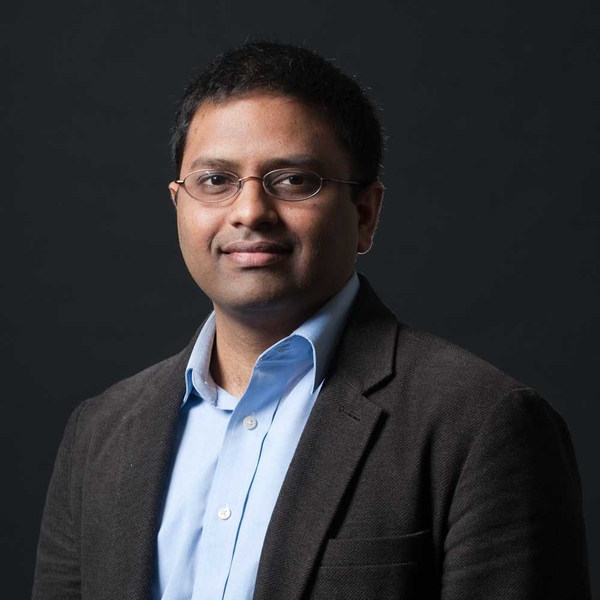
Kripa K. Varanasi, a professor at the Massachusetts Institute of Technology, has been elected to the 2025 class of National Academy of Inventors Fellows, a distinction that recognizes inventors whose work has produced tangible societal and economic impact. The honor places Varanasi among a cohort of leading innovators across U.S. universities, national labs, federal agencies, and mission-driven research institutions, and it highlights the growing visibility of South Asian Americans shaping the future of applied science and technology.
The National Academy of Inventors (NAI) Fellowship is often understood as an acknowledgment of the full arc of invention, not just academic discovery. Fellows are typically recognized for a sustained record of translating research into patents, products, and practices that matter beyond the lab. For universities, these recognitions also signal credibility in technology transfer and commercialization, reinforcing the role of higher education as an engine for U.S. competitiveness. For the broader community, it is a reminder that the scientific leaders who create new knowledge are frequently also the builders who turn that knowledge into tools, systems, and solutions.
At MIT, Varanasi is widely associated with research at the intersection of materials science, thermal and fluid sciences, and manufacturing, where advances can move quickly from concept to application. Invention in these domains has direct relevance to major national priorities, including resilient infrastructure, energy efficiency, climate adaptation, advanced manufacturing, and next-generation industrial processes. The kinds of innovations that earn NAI recognition are typically those with a clear pathway into use, whether through licensing to established industry partners, startup formation, or integration into public-sector systems.
Varanasi’s selection is also meaningful in how it reflects the evolution of academic leadership in the United States. Universities increasingly expect senior researchers to operate across multiple interfaces: scholarship, intellectual property, entrepreneurship, and public impact. That expectation is not purely institutional. It is shaped by a national environment where federal and state investments in research and development seek measurable outcomes, and where private-sector partners look to universities for both talent and innovation pipelines. When a faculty member is recognized by NAI, it often reinforces that their work is already operating in that reality, influencing markets, policy-relevant technologies, or widely adopted scientific methods.
The announcement also matters because recognition of inventors is not evenly distributed across disciplines or demographics, even as the U.S. innovation economy becomes more global and diverse. South Asian Americans have become increasingly visible in science, engineering, and technology leadership, but the pathway from technical excellence to formal recognition, especially in invention and commercialization, can still be uneven. Honors like this help normalize the presence of South Asian American leaders not only as researchers, but also as U.S. inventors whose work is central to national progress.
For the South Asian Spotlight lens, Varanasi’s election is a strong example of leadership that is simultaneously technical and institutional. It highlights a model of impact that extends beyond a single breakthrough and instead reflects a sustained approach to building, patenting, and delivering innovations. That distinction matters because it is the cumulative portfolio of invention that often changes an industry: repeated contributions that improve performance, reduce cost, increase safety, or unlock new capabilities. In practical terms, sustained inventorship frequently translates into collaborations across departments, engagement with industry consortia, and mentoring of students and junior researchers who will carry forward the next generation of technology.
It is also notable that the NAI Fellows list spans many kinds of U.S. institutions, including universities, national laboratories, and government research entities. That breadth reflects how invention in the United States is increasingly networked. Breakthroughs travel through ecosystems, not silos. A core scientific insight may originate in a university lab, be validated with national lab capabilities, be prototyped with industrial partners, and then move into deployment via commercialization or public procurement. Recognition by an academy focused on invention suggests that the recipient is already contributing to that ecosystem, rather than operating purely within academic publishing channels.
While much public attention tends to focus on startup founders or high-profile corporate innovators, the NAI Fellowship helps correct a common misunderstanding: many foundational innovations in the U.S. economy are built by academic inventors working inside universities. Their outputs shape everything from medical devices and diagnostic methods to energy systems and manufacturing techniques. Recognizing academic inventors underscores the importance of sustained research funding, robust intellectual property frameworks, and effective technology transfer practices that can move innovations into use.
For students and early-career professionals, stories like this offer a practical lesson in what leadership can look like in science and engineering. Technical excellence is necessary, but it is rarely sufficient to create broad impact. Impact often requires persistence, collaboration, and the ability to connect research outputs to real-world constraints. It also requires a willingness to engage beyond one’s immediate discipline, since many of the highest-impact technologies sit at intersections. A fellowship rooted in invention signals that those choices were not incidental, they were central to the work.
From a community standpoint, South Asian Americans have often built visibility in technology through prominent roles in software and enterprise leadership. The NAI Fellowship highlights another dimension: invention-oriented leadership grounded in science and engineering domains that power the physical economy. These include advanced materials, energy systems, and manufacturing processes, the kinds of innovations that influence supply chains, industrial capabilities, and the resilience of infrastructure. As the U.S. seeks to strengthen domestic innovation capacity, recognition of inventors working in these areas has implications well beyond a single campus.
Varanasi’s election as an NAI Fellow for 2025 is therefore more than a personal milestone. It signals the continued integration of academic invention into national innovation priorities, and it reinforces the visibility of South Asian Americans contributing at the highest levels of U.S. research and commercialization. It is a story of recognition, but also a story of systems: how universities, inventors, and innovation networks collectively shape what comes next.
Key Takeaways About Kripa K. Varanasi
- Kripa K. Varanasi was elected to the 2025 class of National Academy of Inventors Fellows.
- The honor recognizes sustained invention leadership and real-world impact, not only academic publication.
- The announcement reinforces the role of U.S. universities as engines for patents, commercialization, and innovation ecosystems.
- It adds visibility to South Asian American leadership in invention-driven science and engineering.
- The recognition signals broader relevance to national priorities such as manufacturing, infrastructure, and technology competitiveness.