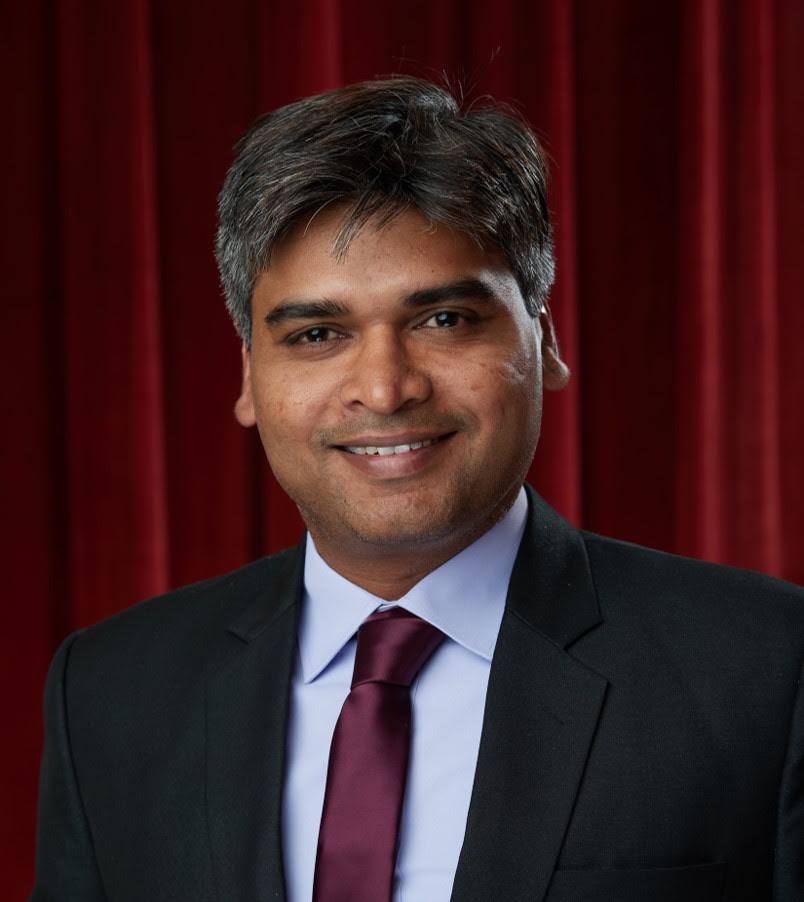
Awadhesh Kumar has spent much of his career learning what happens to a film after the cameras stop rolling. Today, as the Founder of Los Angeles-based AK Studios, he is using that experience to build a new pathway for South Asian independent filmmakers — one that connects distinctive regional stories with international festivals, distributors and audiences.
AK Studios focuses on arthouse and genre films rooted in the Indian subcontinent but designed to travel beyond it. Rather than asking filmmakers to make their stories less culturally specific, Kumar’s approach is built around the idea that deeply local stories can still have universal appeal. His growing slate reflects that philosophy, combining filmmakers from different parts of South Asia with an international production and distribution strategy.
From Engineering and Business to the Film Industry
Kumar did not begin his professional life on a conventional film-school path. His background includes engineering, business and technology, experiences that later became useful in an industry where creativity has to coexist with budgets, contracts, distribution and operational discipline.
He earned an engineering degree before continuing his education at the University of Southern California, including the USC Marshall School of Business. His professional career also included technology and consulting work before he moved more deeply into film and media.
That combination shaped the way Kumar approaches cinema today. Rather than treating creativity and business as opposing forces, he sees financial discipline as one of the conditions that allows independent filmmakers to continue creating. A project has to protect the director’s vision, but it also needs a realistic budget, a distribution strategy and a clear understanding of the audience it hopes to reach.
Learning Global Distribution at NFDC
One of the most important chapters in Kumar’s career came at the National Film Development Corporation of India, where he served in film distribution and syndication leadership.
NFDC has played a significant role in the history of Indian independent cinema, supporting films and filmmakers working outside the country’s most commercial production systems. Kumar’s role placed him at the intersection of Indian cinema and a rapidly changing global distribution landscape.
During his tenure, NFDC expanded the availability of its film catalogue across major digital platforms. The strategy included making acclaimed and historically important Indian films available through services such as Amazon Prime Video, Netflix and other streaming platforms rather than limiting the catalogue to a single outlet.
That experience gave Kumar a close view of an important reality: producing a strong film is only half the challenge. Independent filmmakers also need to understand licensing, digital platforms, theatrical markets, international sales and how films move from production into the hands of audiences.
Those lessons now sit at the center of AK Studios.
Building a Los Angeles-to-South Asia Film Studio
AK Studios is based in Los Angeles but operates with a strong connection to filmmakers and production ecosystems across the Indian subcontinent. Kumar has described the company as a vertically integrated independent studio built around South Asian stories, international talent and global distribution.
The model allows AK Studios to work with filmmakers creating stories in different languages and cultural settings while using Los Angeles as a bridge to American and international film markets.
For Kumar, “South Asian cinema” does not mean one visual style, one language or one type of story. India alone contains dozens of major languages and highly distinct regional film traditions. Bengali psychological horror can sit alongside a Tamil silent comedy or an experimental political satire without either needing to resemble mainstream Hindi cinema.
The common thread is not genre. It is the willingness to support filmmakers with distinctive voices and help those voices travel.
Taking The Exile and Hucch Beyond India
That strategy became particularly visible through two AK Studios productions, The Exile and Hucch.
The Exile, directed by Samman Roy, is a psychological folk-horror film set in rural Bengal in the 1960s. Its story draws on grief, isolation, superstition and Bengali folklore, embracing a setting and cultural atmosphere that remain highly specific to the region.
Hucch, directed by Thinesh Kumar, takes a very different approach. The black-and-white silent comedy is set in rural Southern India and follows a man struggling to survive under an absurd law that makes sneezing punishable by death.
Despite their very different tones, both projects demonstrate the type of cinema Kumar wants AK Studios to support: films that are culturally rooted without assuming that cultural specificity prevents international appeal.
In 2025, Buffalo 8 Distribution acquired worldwide rights to both titles, giving the projects a global distribution pathway. The Exile subsequently reached digital audiences through platforms including Amazon and Tubi, while Hucch received a U.S. digital release in 2026.
For a young independent studio, moving two regionally rooted Indian films from production into international distribution represented an important proof of concept.
watch full interview on The INDUStryShow:https://theindustryshow.org/awadhesh-kumar/
Expanding the Slate at Cannes
AK Studios continued that expansion in 2026 with a larger slate of South Asian projects presented around the Cannes film market.
Among those projects is Vijay Jayapal’s An Idiot, an absurdist political comedy exploring the psychology surrounding hate and political violence. Another is Samman Roy’s The Undying, a gothic-horror project that continues AK Studios’ interest in genre storytelling rooted in South Asian environments.
The company’s developing slate demonstrates a willingness to move between prestige cinema and genre filmmaking rather than committing to only one corner of the independent market.
Cannes is particularly important for companies operating at this level because the festival is not only a place where finished films compete for recognition. The Marché du Film brings producers, distributors, financiers, sales agents and programmers from around the world into the same ecosystem.
For Kumar, participation in markets like Cannes is therefore a business-development strategy as much as a creative milestone. Relationships built there can determine where a film is sold, which festivals consider it and whether a director receives the opportunity to make another project.
Why Distribution Matters as Much as Production
Independent filmmaking often celebrates the moment a movie is completed, but Kumar’s career has taught him to think further ahead.
A film without a realistic route to an audience can remain unseen regardless of its quality. That makes distribution planning essential from the earliest stages of a project.
Kumar’s experience allows AK Studios to approach films with both sides of the equation in mind. What will it cost to produce the movie? Who is likely to watch it? Which festivals are relevant? Which sales agents understand the genre? Which streaming platforms or distributors operate in the target territories?
This does not mean allowing commercial calculations to dictate every creative decision. Instead, the goal is to create enough financial and distribution discipline that unusual films remain possible.
For independent South Asian cinema, that infrastructure can be particularly valuable because filmmakers outside mainstream industries may not already have relationships with American or European distributors.
AK Studios is attempting to become part of that bridge.
Producing With Financial Discipline
Kumar’s approach to production is also shaped by lessons learned outside film.
An earlier entrepreneurial venture grew rapidly but ran into difficulties when customer payments did not arrive on time. The experience taught him that revenue recorded on paper means very little when a business does not have enough cash available to meet its obligations.
That lesson translates directly into filmmaking, where production budgets can disappear quickly and unexpected costs are common.
Independent filmmakers rarely have unlimited resources. A project therefore has to make deliberate choices about where money creates value on screen and where spending can be reduced without damaging the story.
Kumar treats that constraint not merely as a limitation but as part of the producer’s responsibility. Creative ambition may be unlimited, but production resources are not. A sustainable studio has to understand both.
Bringing Order to Creative Chaos
Film production is fundamentally collaborative, and collaboration can be unpredictable.
A producer may have to coordinate directors, writers, actors, cinematographers, editors, financiers, lawyers, distributors and festival teams, all of whom approach the same project from different perspectives.
Kumar sees the producer as the person who helps bring structure to that complexity without removing the creative energy that made the project interesting in the first place.
That requires judgment as much as organization. A filmmaker may need more time to solve a creative problem, while a production may simultaneously be approaching a hard budget limit. A distributor may see commercial possibilities that conflict with the director’s original assumptions. International partners may operate across different legal systems, languages and time zones.
The producer has to keep those different interests moving toward the same finished film.
For Kumar, years of building relationships across India, the United States and international film markets have become one of the most important assets behind AK Studios.
Creating Space for Regional South Asian Voices
The rise of streaming has introduced global audiences to a much wider range of South Asian entertainment, but major platforms still represent only a fraction of the stories being created across the region.
Regional Indian cinema contains filmmakers working in Assamese, Bengali, Tamil, Malayalam, Kannada and many other languages, often with dramatically different storytelling traditions and cultural references.
Kumar believes those differences can be an advantage.
International audiences do not necessarily need a film to imitate Hollywood in order to engage with it. In fact, independent cinema often attracts attention precisely because it offers access to worlds, communities and perspectives audiences have not encountered before.
The challenge is building the infrastructure that allows those filmmakers to reach international buyers and viewers.
AK Studios’ growing slate is an attempt to create that pathway while preserving the qualities that made those stories distinctive in the first place.
A South Asian Producer Working Across Borders
Kumar’s career also reflects a broader evolution in the South Asian American entertainment ecosystem.
Diaspora professionals are increasingly participating not only as actors or directors, but also as producers, financiers, distributors and company builders. Those roles matter because they influence which stories receive funding, how they are positioned and which audiences ultimately get to see them.
From Los Angeles, Kumar occupies a particularly useful position between two large entertainment markets. His professional history in India gives him familiarity with regional filmmakers and production systems, while his work in the United States connects him to the business infrastructure surrounding global independent cinema.
That ability to operate across both environments allows AK Studios to function less like a traditional production company working in one country and more like a bridge between creative ecosystems.
Building a Sustainable Independent Film Company
Kumar’s ambition extends beyond producing individual movies.
His longer-term goal is to build a sustainable studio with a continuing slate of projects, reliable distribution relationships and financing structures capable of supporting multiple films.
That requires thinking differently from a filmmaker trying to finance one project at a time. A studio must consider how a portfolio of films works together, how risk can be spread across projects and how critical prestige and commercial performance can support one another.
Kumar has discussed the possibility of structured film financing that combines arthouse projects with titles carrying greater commercial potential. The logic resembles portfolio investing: not every film has to produce the same type of return, but the overall slate has to remain sustainable.
That model could provide filmmakers with something independent cinema often lacks — continuity.
Instead of rebuilding the entire financial and distribution structure for every new project, directors could work within an ecosystem designed to help multiple projects move from development to market.
Persistence as a Career Strategy
Kumar’s path has moved through engineering, technology, consulting, distribution, entrepreneurship and independent film production. Viewed individually, those stages may appear disconnected. Together, they have given him the technical, financial and creative perspective required to run the type of studio he is now building.
That career also reinforces one of his central beliefs: success often comes from consistency rather than a single breakthrough.
Film projects take years. Distribution relationships take years. Studios take even longer.
For entrepreneurs operating in creative industries, the ability to continue when immediate results are unclear can be as important as talent itself.
Kumar describes startup life as something closer to a lifestyle than a temporary phase. The problems do not disappear once a company reaches a particular milestone; they simply change.
The task is to keep adapting.
Building a Global Audience for Local Stories
Awadhesh Kumar’s work with AK Studios ultimately revolves around a simple proposition: South Asian filmmakers should not have to choose between telling culturally authentic stories and reaching international audiences.
A Bengali folk-horror film can travel. A Tamil silent comedy can travel. A politically challenging independent feature can travel.
But those journeys require more than creative ambition. They require producers who understand financing, festivals, distribution and how different parts of the global film business connect.
By combining his experience in Indian film distribution with an independent production company based in Los Angeles, Kumar is building that infrastructure one project at a time.
His work represents a larger opportunity for South Asian cinema: not simply exporting more films, but creating a durable system through which distinctive filmmakers can reach audiences far beyond the places where their stories began.
Key Takeaways About Awadhesh Kumar
- Awadhesh Kumar is the Founder of AK Studios, a Los Angeles-based independent film production company focused on South Asian arthouse and genre cinema.
- His background spans engineering, business, technology, consulting, film distribution and production.
- He studied at the University of Southern California’s Marshall School of Business.
- Kumar previously served as Head of Distribution and Syndication at India’s National Film Development Corporation.
- At NFDC, he was involved in expanding the organization’s film catalogue across major global and Indian streaming platforms.
- AK Studios focuses on culturally rooted South Asian films designed for international festivals, distribution and global audiences.
- Buffalo 8 acquired worldwide distribution rights to AK Studios features The Exile and Hucch in 2025.
- The Exile is a Bengali psychological folk-horror film, while Hucch is a black-and-white silent comedy set in Southern India.
- AK Studios expanded its slate in 2026 with projects including Vijay Jayapal’s An Idiot and Samman Roy’s The Undying.
- Kumar has participated in major international film markets, including Cannes, to develop sales, distribution and festival relationships.
- He also appeared at ASAN’s South Asian Advantage programming at SXSW in 2026 to discuss the global independent film ecosystem.
- His long-term vision is to build a sustainable production and distribution infrastructure capable of taking distinctive South Asian stories to audiences around the world.