From India to the American Technology Industry
RK's professional journey began in India, where he developed an early interest in technology, entrepreneurship, and solving problems through software. He eventually moved to the United States, building a career that would take him through major technology companies and several entrepreneurial ventures. Over the years, he developed experience in data science, artificial intelligence, product management, and enterprise technology. His professional background includes work at organizations such as Amazon, IBM, Clara Analytics, and Netradyne, where he gained exposure to developing and scaling sophisticated technology products. These experiences gave him an understanding of how businesses adopt artificial intelligence and how data-driven systems can improve operational efficiency. Working across established technology companies and startups also exposed him to the different challenges organizations face when introducing new technologies. While large companies often possess the resources to invest in advanced systems, smaller organizations frequently struggle with the costs and complexities of implementation. For RK, this reinforced an important principle: technology creates meaningful value when it solves a genuine problem rather than simply introducing another tool into an existing process. That philosophy would eventually become central to Legalyti.Building a Career Across Artificial Intelligence and Entrepreneurship
Before entering legal technology, RK had already established himself as an entrepreneur and technology professional with experience across multiple industries. His earlier ventures included ShoutStart, a crowdfunding initiative, and Socialblood, a platform designed to connect blood donors with people seeking blood donations. He also worked on businesses such as Pawsh and PayHype, exploring opportunities in consumer services and financial technology. These ventures reflected his recurring interest in identifying fragmented markets and using technology to connect people with services more efficiently. Although the industries were different, his underlying approach remained consistent: understand an existing problem, identify where traditional systems create unnecessary friction, and build a product capable of simplifying the experience. Alongside entrepreneurship, RK continued developing expertise in artificial intelligence and data science, including work related to AI and edge computing. He also authored educational material covering product management and data science, reflecting his interest in sharing technical and business knowledge. His experience across both large companies and startups gave him a perspective that would prove useful when entering an industry as complex as legal services, where building technology is only one part of the challenge and convincing people to change established practices can be equally difficult.How Immigration Challenges Inspired Legalyti
The idea for Legalyti emerged partly from RK's personal experiences with the American immigration system. Like many skilled immigrants, he had to navigate a complicated process involving different visa categories, professional restrictions, legal documentation, and long-term immigration planning. His immigration journey included transitions between student status, employment-based visas, and eventually permanent residency. These experiences exposed him to the challenges individuals face when trying to understand legal requirements while simultaneously managing their careers, businesses, and personal lives. For immigrant entrepreneurs, those challenges can become particularly significant because immigration rules may influence employment decisions, company ownership arrangements, and the ability to pursue business opportunities. RK has discussed how immigration restrictions affected an earlier startup, creating a difficult professional setback despite the progress the business had made. The experience left a lasting impression and prompted him to question whether technology could help people navigate complicated legal systems more effectively. Rather than viewing these challenges as isolated frustrations, he began recognizing the broader opportunity to improve the way legal services are accessed and delivered. Over time, that realization evolved into Legalyti.Building Legalyti: An AI-Native Platform for Legal Services
Legalyti is designed around the idea that law firms should be able to use artificial intelligence throughout their daily operations rather than treating AI as an additional tool for individual tasks. Traditional legal practices often depend on extensive administrative work, with attorneys and staff spending significant portions of their day collecting documents, entering client information, preparing forms, organizing case files, and communicating with clients. Although these activities are necessary, they can reduce the time legal professionals have available for complex analysis, client relationships, and legal strategy. RK recognized that automation could help address these inefficiencies while allowing attorneys to devote more attention to work requiring professional expertise. Through Legalyti, RK aims to connect different parts of a legal matter within a single technology platform. Its capabilities include client intake, legal research assistance, document drafting, case management, and workflow automation, allowing information to move more efficiently between different stages of a case. The company's broader vision is to support a network of AI-native law firms capable of operating with greater efficiency while maintaining professional oversight. For RK, the opportunity is not simply to digitize existing paperwork, but to rethink how legal services can be delivered when artificial intelligence becomes part of the underlying operating system.Helping Smaller Law Firms Compete Through Technology
One of Legalyti's primary areas of focus is making advanced legal technology accessible to smaller and midsized law firms. Large legal organizations may have dedicated technology departments, substantial software budgets, and extensive administrative teams, while smaller practices often operate with fewer resources. This requires attorneys to manage both complex legal work and the everyday responsibilities of running a business, including client communication, scheduling, document management, research, and administrative coordination. RK believes artificial intelligence can help reduce some of these burdens and allow smaller firms to operate more efficiently without expanding their administrative workforce at the same rate. By automating repetitive activities and connecting information across workflows, Legalyti aims to provide legal professionals with tools that would otherwise require multiple software subscriptions or substantial internal development. The platform is designed to support different practice sizes, including solo attorneys and growing firms, while allowing them to maintain control over their clients and professional responsibilities. Instead of replacing lawyers, the technology is intended to support their work by making routine processes faster and more consistent. This approach could help smaller firms dedicate more time to client relationships, legal analysis, and strategic decision-making while remaining competitive in an increasingly technology-driven profession.Connecting Clients With Legal Professionals
Legalyti's approach also addresses the experience of people seeking legal assistance. For many individuals, finding the right attorney can be confusing, particularly when legal needs involve immigration, employment, family matters, contracts, or business formation. Understanding which type of professional to contact is not always straightforward, and even after identifying an attorney, clients may face a lengthy process of explaining their circumstances, sharing documents, completing forms, and waiting for updates. These difficulties can make legal assistance feel overwhelming, especially for people who are unfamiliar with the American legal system. Legalyti is developing a consumer-facing experience intended to simplify that journey by providing AI-assisted legal information and helping individuals understand their situation before connecting with independent licensed attorneys when professional assistance is needed. The platform aims to improve how information is collected and organized, reducing unnecessary repetition and making communication between clients and legal professionals more efficient. This creates a connection between two parts of the legal-services market: people seeking help and the law firms responsible for providing it. For RK, improving accessibility requires addressing both sides because a more efficient law firm may provide better service, but the client experience must also become easier to understand and navigate.
Artificial Intelligence Without Replacing Legal Judgment
Using artificial intelligence in legal services introduces important responsibilities because legal matters can affect immigration status, employment, finances, family relationships, and personal security. Incorrect information or poorly prepared documents can have serious consequences, making reliability and professional oversight essential. RK's approach recognizes that AI should support legal professionals rather than replace their judgment, particularly when cases involve complex legal interpretations or decisions with significant personal consequences. Legalyti therefore describes a model in which intelligent systems assist with research, document preparation, intake, and administrative coordination while licensed attorneys remain responsible for reviewing cases and providing legal advice. The platform also emphasizes traceability and professional review, allowing users to examine information supporting AI-generated responses. These safeguards are particularly important because legal requirements vary across jurisdictions and can change over time. For a technology company operating in this environment, innovation must be balanced with reliability, security, confidentiality, and compliance with professional regulations. Legalyti itself is a technology provider rather than a law firm, and its network model relies on independent licensed attorneys to deliver professional legal services. This distinction is central to the company's effort to modernize legal operations while preserving the human judgment required in the profession.Learning From Startup Challenges
RK's journey toward Legalyti has involved both entrepreneurial successes and significant setbacks. Earlier ventures exposed him to the difficulties of fundraising, technology development, customer adoption, and scaling, while his experience navigating immigration restrictions created additional challenges. These moments shaped his perspective on failure and reinforced the importance of understanding the factors that determine whether a business can succeed. Rather than viewing a failed venture as the end of a professional ambition, RK increasingly began treating setbacks as opportunities to learn what needed to change, whether that involved market timing, technology, business structure, or execution. The rapid development of artificial intelligence has made adaptability particularly important in his current work. Technologies that once required extensive teams and long development cycles can increasingly be built and tested by smaller organizations, creating opportunities for entrepreneurs entering industries previously dominated by large companies. At the same time, this accessibility increases competition because other startups can use many of the same technological capabilities. RK believes that building a sustainable business therefore requires more than moving quickly; founders must continue learning, understand their customers, and remain prepared to adjust their approach as the market evolves. His experiences have reinforced the value of resilience, flexibility, and maintaining perspective through periods of both success and uncertainty.The Opportunity to Modernize Legal Services
Legal technology is entering a period of significant change as artificial intelligence becomes more capable of processing documents, retrieving information, and supporting complex professional workflows. Historically, many technology products for law firms have focused on individual functions such as billing, scheduling, document storage, or legal research. Although these tools can improve efficiency, professionals may still need to move information manually between different systems, creating unnecessary duplication and administrative delays. AI-native platforms offer the possibility of connecting more of these processes, allowing legal information to flow through a coordinated system rather than remaining separated across multiple applications. For example, a client's information could be collected once, organized into a case file, used to prepare preliminary documents, and made available to the attorney responsible for reviewing the matter. When implemented carefully, these workflows could reduce administrative duplication while improving consistency, communication, and visibility. RK sees this transformation as an opportunity to reconsider how legal services are structured, particularly for smaller firms and individuals who may find traditional legal processes difficult to navigate. Legalyti's ambition is to participate in that transformation by creating technology capable of supporting legal matters from initial contact through documentation and ongoing case management.A South Asian Entrepreneur Building Solutions From Personal Experience
RK's career reflects the growing contribution of South Asian entrepreneurs to the American technology ecosystem. His journey has involved moving between countries, navigating immigration challenges, working at major technology companies, and developing startups across different industries. Like many immigrant founders, he has experienced situations where professional ambition intersects with complicated administrative and legal requirements. Although those experiences can create obstacles, they can also reveal problems that established companies have overlooked, creating opportunities for entrepreneurs who understand the challenges personally. Legalyti is an example of that process, as a problem that initially affected RK eventually became the foundation for a business aimed at helping other individuals and legal professionals. His broader entrepreneurial experience also reflects an interest in using technology to improve access to services and connect people with opportunities. For younger South Asian professionals considering entrepreneurship in the United States, his journey offers a perspective on resilience, adaptability, and the importance of building businesses around genuine problems. It also demonstrates how immigrant founders can combine personal experience with technical expertise to develop solutions that serve communities far beyond their own.Building the Next Generation of AI-Native Legal Infrastructure
Legalyti represents RK's latest effort to combine artificial intelligence with a practical problem affecting individuals and businesses across the United States. The company's initial emphasis has included immigration-related legal workflows, an area where RK's personal experience gives him a direct understanding of the challenges users may encounter. Its broader ambition extends to supporting legal professionals working across different practice areas, helping them manage administrative processes while maintaining responsibility for legal decisions. The company's vision is to create technology that can support legal services more comprehensively rather than addressing only isolated tasks. Building such a system requires navigating substantial complexity because different states have different legal requirements, attorneys operate under professional regulations, and clients need confidence that their information is handled securely. Technology alone cannot solve every part of that challenge, but AI can potentially reduce the administrative work surrounding legal services and allow attorneys and clients to focus more directly on the problems they need to resolve. RK believes that combining intelligent automation with professional oversight can create a more effective model for delivering legal assistance. Rather than positioning AI as a replacement for lawyers, Legalyti aims to become infrastructure that helps legal professionals work more efficiently while making legal services easier for individuals to access.Turning Personal Setbacks Into Long-Term Opportunity
Rathnakumar Udayakumar's career demonstrates how professional challenges can eventually become the inspiration for new businesses. His experience spans artificial intelligence, data science, entrepreneurship, and enterprise technology, and through Legalyti, those capabilities are now being applied to legal services, an industry where trust, efficiency, and professional judgment are particularly important. What began with personal difficulties navigating the American immigration system has evolved into an effort to simplify legal workflows for both attorneys and clients. His entrepreneurial philosophy emphasizes hard work, adaptability, and maintaining perspective through periods of success and failure. As artificial intelligence continues to reshape professional industries, RK's work highlights an opportunity for entrepreneurs who understand both technology and the human problems it can address. His journey reflects the importance of persistence, practical execution, and the willingness to learn from difficult experiences rather than allowing them to define future possibilities. For RK, building Legalyti is ultimately about more than creating another AI product; it is about using technology to make a complicated system more accessible, efficient, and easier for people to navigate. His story serves as an example of how challenges experienced by one individual can inspire solutions intended to benefit an entire industry.Key Takeaways About Rathnakumar Udayakumar (RK)
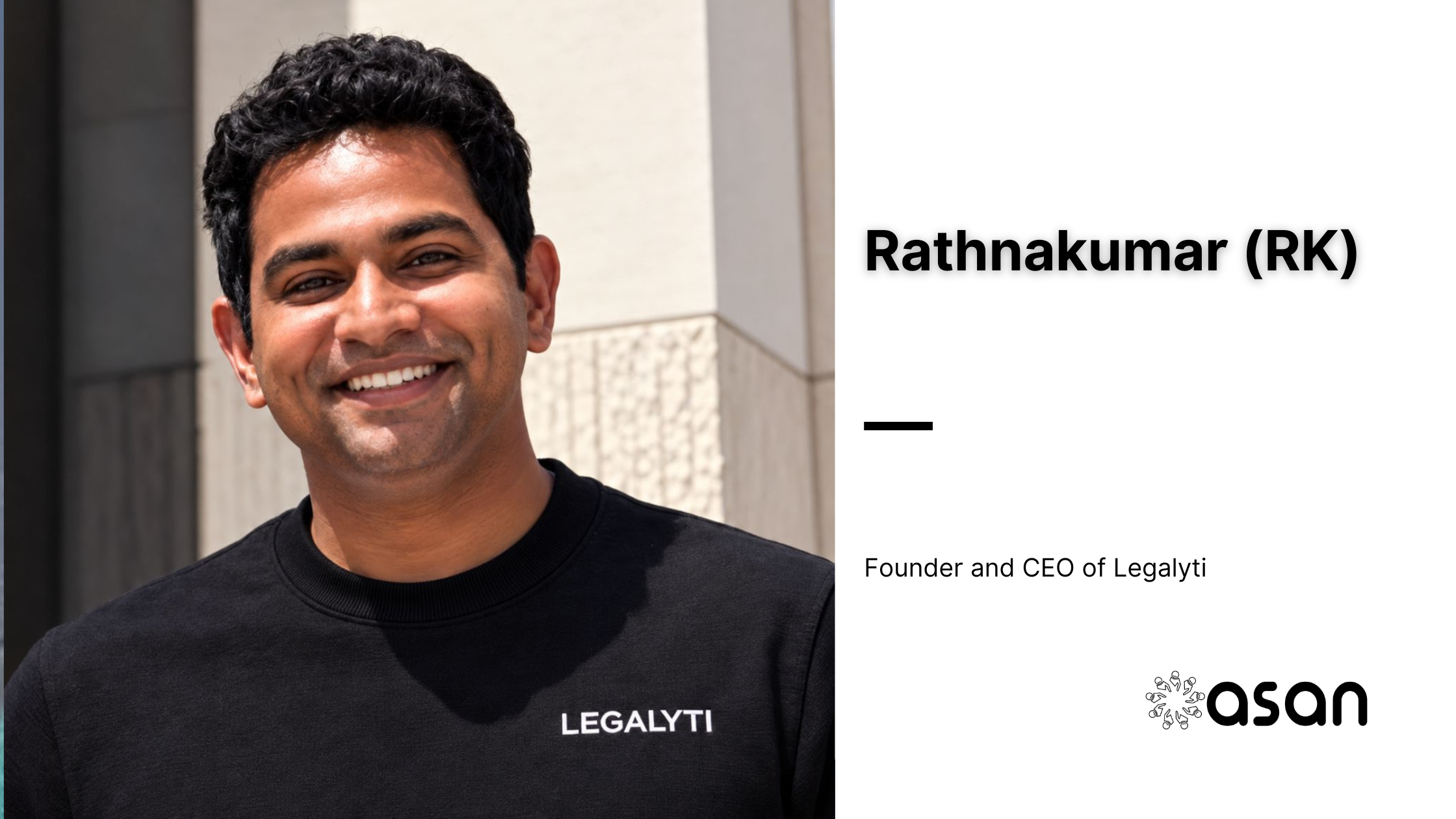
- Rathnakumar Udayakumar, commonly known as RK, is the Founder and CEO of Legalyti, an AI-native legal technology platform.
- He has more than a decade of experience in artificial intelligence, data science, technology product development, and entrepreneurship.
- His professional experience includes organizations such as Amazon, IBM, Clara Analytics, and Netradyne.
- Before Legalyti, he developed entrepreneurial ventures including ShoutStart, Socialblood, Pawsh, and PayHype.
- His experiences navigating U.S. immigration influenced his decision to develop technology aimed at simplifying legal processes.
- Legalyti helps law firms manage client intake, legal research, document drafting, case management, and administrative workflows using artificial intelligence.
- The company focuses on making advanced AI technology more accessible to smaller law firms and independent legal practitioners.
- Legalyti also offers a consumer-facing approach intended to help individuals understand legal issues and connect with independent licensed attorneys.
- The company emphasizes the use of AI as an assistant to legal professionals rather than a replacement for licensed attorneys.
- RK has experience developing AI technologies and has authored educational material related to product management and data science.
- His entrepreneurial journey reflects the challenges and opportunities experienced by skilled immigrants building technology companies in the United States.
- Legalyti's broader ambition is to develop AI-native infrastructure that can make legal services more efficient and accessible.
- RK's leadership philosophy emphasizes resilience, hard work, adaptability, and learning from both successful ventures and setbacks.